Emergency lighting in halls. Even at 12 metres.
In halls, routes are long, ceilings high and machines running. When the power fails, everyone must find their way out – and hazardous workplaces need enough light instantly. We make existing LED high-bays emergency-capable and testing easy with self-test.
In warehouses, logistics and production halls, safety lighting for high-risk task areas is central alongside escape route lighting: EN 1838 requires at least 10% of normal illuminance, but no less than 15 lx, within 0.5 seconds. The basis is workplace legislation and the risk assessment, plus industrial building rules for larger buildings. Existing LED high-bays can often be made emergency-capable with emergency drivers.
What applies?
- Escape route lighting along escape routes and main aisles – at least 1 lx on the centre line
- Safety lighting for high-risk task areas: 10% of normal lighting, at least 15 lx, within 0.5 s
- Exit signs with long viewing distances – visible even between high-bay racks
- Protection rating suited to the environment: dust, moisture, temperature – often IP65
- Industrial building regulations for larger industrial buildings
- Testing high-mounted luminaires – ideally via self-test instead of a lift
This describes typical requirements, using Germany as the reference. What applies to your building depends on the building permit, fire safety concept, risk assessment and national or regional rules – exactly what we check during the free on-site survey.
Common mistakes
Racks shade the escape route lighting and hide exit signs.
Machines and hazardous processes are not captured separately in the design.
If every test needs a lift, testing rarely happens. Self-test luminaires solve this.
How we make it easy
We survey the building, escape routes and existing system and create a standard-compliant emergency lighting design – free and non-binding.
Exit sign, escape route and recessed luminaires plus emergency drivers – with self-test and LiFePO4 battery.
Every test documented digitally, deadlines monitored automatically – ready to show at any inspection.
Annual on-site inspection, all batteries replaced in year 5–6 and repairs – predictable costs instead of surprises.
Matching products
Emergency drivers
Self-contained emergency drivers with battery and self-test – for existing LED luminaires and LED high-bays up to 300 W.
 3D
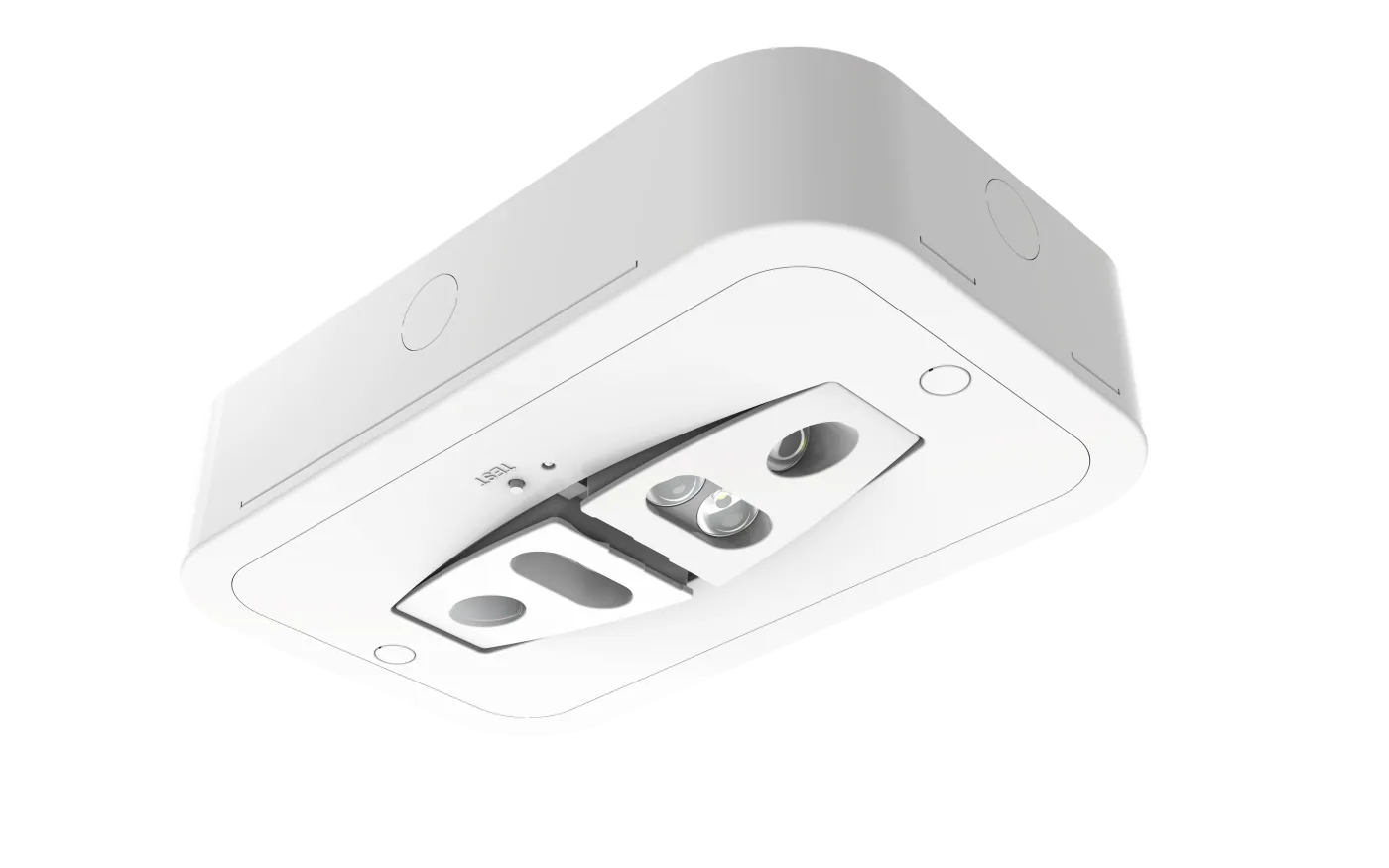
3DEscape route luminaire
Surface-mounted luminaire for escape routes, light output adjustable to 90° or 180°.
 3D
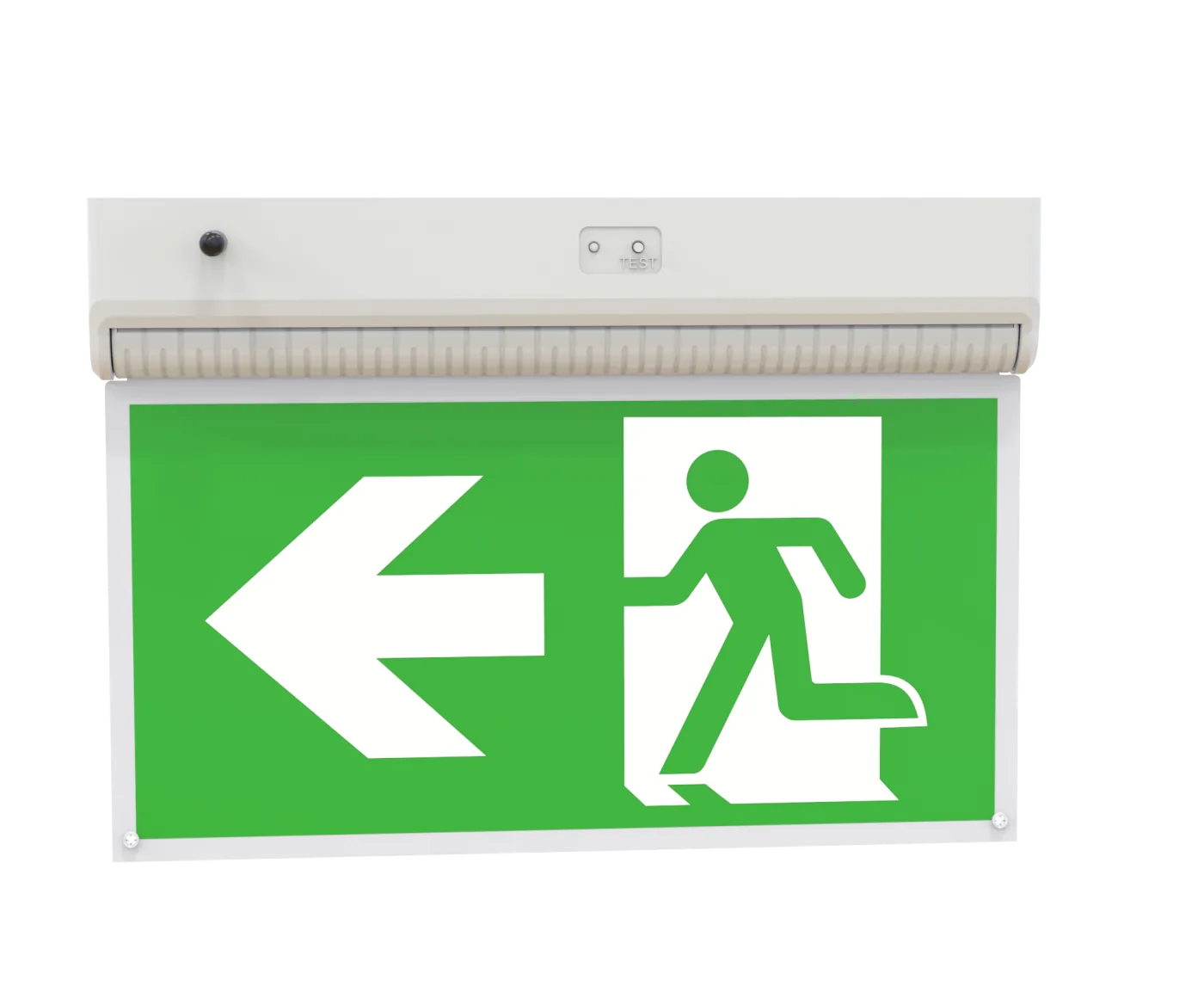
3DExit sign luminaire
Discreet LED exit sign luminaire for ceiling, wall, side or pendant mounting – up to 30 m viewing distance.
Frequently asked questions
Does a warehouse need emergency lighting?
In most cases yes: long, confusing escape routes, large areas and workplaces at machines regularly lead to safety lighting in the risk assessment. Larger industrial buildings also require it under industrial building rules.
What are high-risk task areas?
Workplaces where a sudden loss of light would endanger people, for example at running machines, hot processes or in laboratories. EN 1838 requires at least 10% of normal illuminance, at least 15 lx, within 0.5 seconds.
Can existing LED high-bays serve as emergency lighting?
Often, yes. The Series 19 emergency driver in IP65 makes LED high-bays up to 300 W emergency-capable – with battery and self-test. We check on site whether luminaire and calculation match.
How do you test emergency luminaires at 12 metres?
With self-test luminaires, function and duration tests run automatically and results appear in the app. A lift is only needed when something actually has to be replaced.
What protection rating do emergency luminaires in halls need?
It depends on dust, moisture and temperature. IP65 often makes sense in warehouses and production halls; cold stores or areas cleaned with water have their own requirements.
Related knowledge
Types of Emergency Lighting: Escape Route, Anti-Panic, Standby
Escape route, anti-panic, high-risk task area and standby lighting explained per EN 1838 – with clear definitions, an overview table and operating modes.
Read articleEmergency Lighting Illuminance: Lux Levels per EN 1838
How bright must emergency lighting be? 1 lx, 0.5 lx, 15 lx, 5 lx: all EN 1838 lux levels, uniformity ratios and response times – with table and planning tips.
Read articleSelf-Testing Emergency Lights: Automatic Testing to EN 62034
How do self-testing emergency lights to EN 62034 work? Test sequence, status LED, app monitoring, pros and cons, remaining duties and retrofit options.
Read articleOther building types
Your contacts
Emergency lighting without worries.
Luminaires, installation and maintenance from a single source – every inspection documented digitally in our app. We start with a free on-site survey and standard-compliant design.