Emergency lighting in offices. Simply done.
In offices, emergency lighting is rarely a big topic – until the next inspection, or until nobody knows after a refit whether the exit signs are still right. We make sure everything fits and tests run on their own.
Office buildings are usually not special buildings. Whether safety lighting is required follows from the employer's risk assessment and the building permit – typical reasons are many employees, several floors, long or confusing escape routes and areas without daylight. Escape routes and emergency exits must be marked. Where no longer duration is required, designs usually use 1 hour.
What applies?
- Employer's risk assessment: number of employees, floors, length and clarity of escape routes
- Safety lighting typically in stairwells, internal corridors and areas without daylight
- Exit signs to ISO 7010 – from the workstation to the exit
- Large office floors: check open-area (anti-panic) lighting to EN 1838
- High-rise buildings: own regulations, usually requiring safety lighting
- Monthly function test and annual duration test – documented in the logbook
This describes typical requirements, using Germany as the reference. What applies to your building depends on the building permit, fire safety concept, risk assessment and national or regional rules – exactly what we check during the free on-site survey.
Common mistakes
New partitions, desk sharing or open plan – and the exit signs still show the old route.
Nobody is responsible for the monthly function test, so it just doesn't happen.
Cabinets, room dividers and suspended acoustic panels cover exit signs.
How we make it easy
We survey the building, escape routes and existing system and create a standard-compliant emergency lighting design – free and non-binding.
Exit sign, escape route and recessed luminaires plus emergency drivers – with self-test and LiFePO4 battery.
Every test documented digitally, deadlines monitored automatically – ready to show at any inspection.
Annual on-site inspection, all batteries replaced in year 5–6 and repairs – predictable costs instead of surprises.
Matching products
 3D
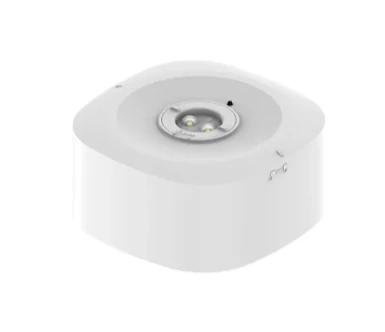
3DCompact emergency light
Compact emergency light for escape routes, recessed or surface-mounted, with interchangeable optics.
 3D
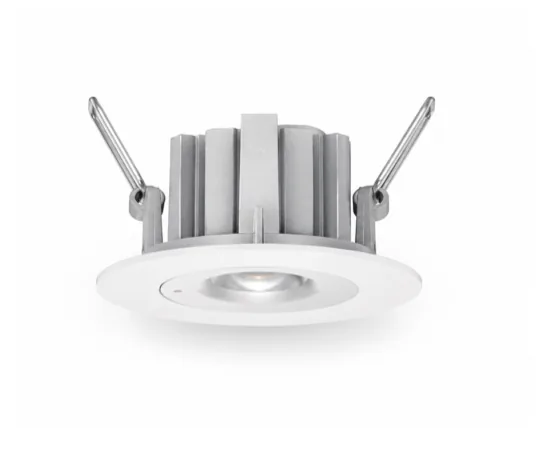
3DRecessed downlight
Compact emergency recessed luminaire for discreet ceiling integration, 500 lm in emergency mode.
 3D
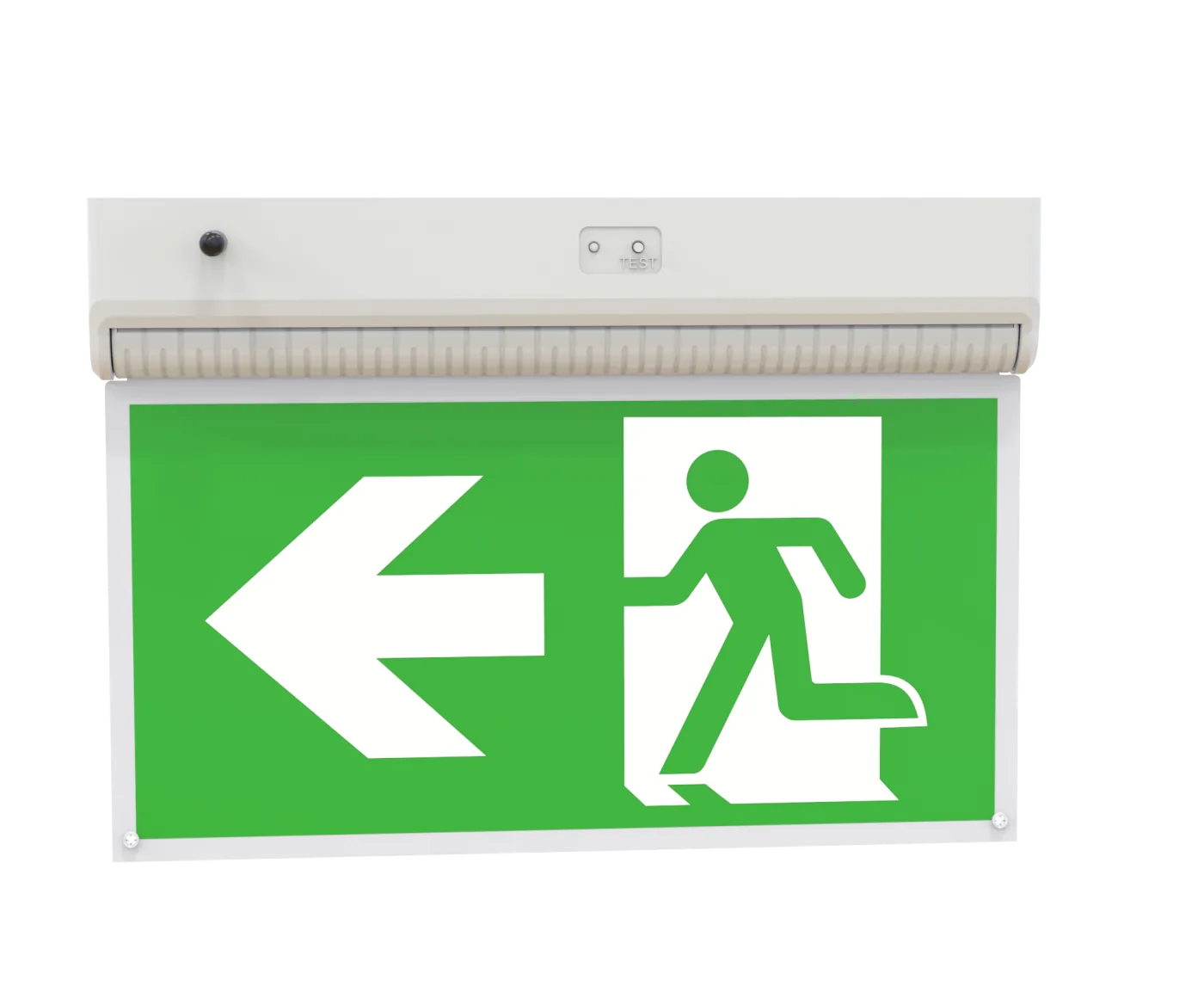
3DExit sign luminaire
Discreet LED exit sign luminaire for ceiling, wall, side or pendant mounting – up to 30 m viewing distance.
Frequently asked questions
Does every office need emergency lighting?
Not automatically. For workplaces, the risk assessment decides whether safety lighting is required – for example with many employees, confusing escape routes or areas without daylight. The building permit may also require it.
Are photoluminescent exit signs enough in an office?
Where no safety lighting is required, photoluminescent signs may be permitted. If safety lighting is mandatory, exit signs must be illuminated or internally lit. The risk assessment and building permit are decisive.
How long must office emergency lighting last?
Office buildings without special rules are usually designed for the minimum of 1 hour to EN 1838. If the building permit or fire safety concept requires more, the longer duration applies.
Who is responsible for emergency lighting in an office?
The employer for the workplace, the owner usually for systems required by building law. We take care of testing and documentation – provable at any time via the app.
How much effort is testing in an office?
With self-test luminaires, hardly any: function and duration tests run automatically and results appear in the app. With the maintenance contract we handle defects and battery replacement.
Related knowledge
When Is Emergency Lighting Required? Workplaces and Buildings
When is emergency lighting a legal requirement? EU workplace rules, building regulations and high-risk buildings explained, with Germany as a worked example.
Read articleEscape Route Signage: Safety Signs, Evacuation Plans, Guidance
How should escape routes be marked? ISO 7010 safety signs, illuminated vs photoluminescent signs, arrow rules, evacuation plans and floor-level guidance.
Read articleEmergency Lighting Testing Intervals: Daily, Monthly, Annual
How often must emergency lighting be tested? Daily, monthly and annual test intervals under EN 50172, with national examples, a clear table and practical tips.
Read articleOther building types
Your contacts
Emergency lighting without worries.
Luminaires, installation and maintenance from a single source – every inspection documented digitally in our app. We start with a free on-site survey and standard-compliant design.