Emergency lighting for commercial units. Clearly sorted.
Office, practice, workshop or storage: in commercial units the use determines the emergency lighting – and in rented units often the question of who is actually responsible. We make sure system, testing and documentation are right, for owners and tenants.
In commercial units, emergency lighting depends on the use: offices, practices, shops, workshops and storage have different requirements. The basis is workplace legislation and the employer's risk assessment, plus building regulations for special buildings. For rented units, the lease should clearly state who is responsible for installation, testing and documentation.
What applies?
- Employer's risk assessment under workplace legislation
- Shared escape routes such as stairwells and corridors – usually the owner's responsibility
- Rented units: emergency lighting and testing by landlord or tenant, depending on the lease
- Exit signs from every workstation to the exit – also after fit-outs with new partitions
- Workshops and production: safety lighting for high-risk task areas
- Hand over the logbook and documentation when tenants change
This describes typical requirements, using Germany as the reference. What applies to your building depends on the building permit, fire safety concept, risk assessment and national or regional rules – exactly what we check during the free on-site survey.
Common mistakes
The landlord thinks the tenant tests – the tenant thinks the landlord does. In the end nobody tests.
New partitions and uses, but luminaires and exit signs stay as they were ten years ago.
When tenants change, the logbook disappears – and the proof is missing at the next inspection.
How we make it easy
We survey the building, escape routes and existing system and create a standard-compliant emergency lighting design – free and non-binding.
Exit sign, escape route and recessed luminaires plus emergency drivers – with self-test and LiFePO4 battery.
Every test documented digitally, deadlines monitored automatically – ready to show at any inspection.
Annual on-site inspection, all batteries replaced in year 5–6 and repairs – predictable costs instead of surprises.
Matching products
 3D
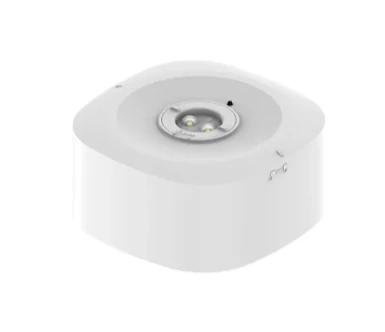
3DCompact emergency light
Compact emergency light for escape routes, recessed or surface-mounted, with interchangeable optics.
 3D
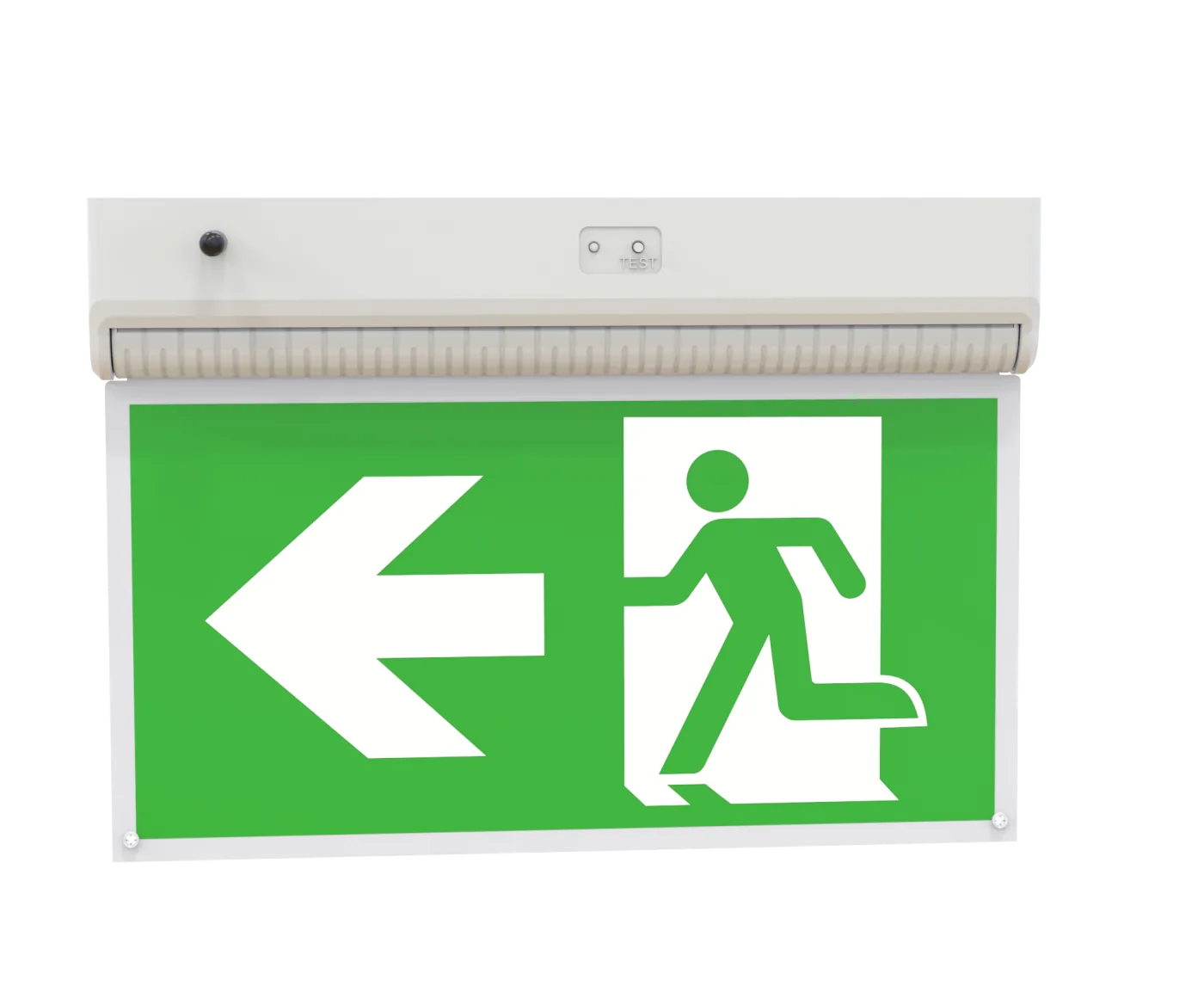
3DExit sign luminaire
Discreet LED exit sign luminaire for ceiling, wall, side or pendant mounting – up to 30 m viewing distance.
Emergency drivers
Self-contained emergency drivers with battery and self-test – for existing LED luminaires and LED high-bays up to 300 W.
Frequently asked questions
Who is responsible for emergency lighting in a rented commercial unit?
The employer is responsible for the workplace; the owner is usually responsible for systems required by building law. Who carries out installation, testing and documentation in practice should be clearly set out in the lease. If in doubt, have the lease reviewed legally.
Does every commercial unit need emergency lighting?
Not automatically. Whether safety lighting is required follows from the risk assessment, building permit and any special building rules. Escape routes and emergency exits generally have to be marked.
What has to be done when the use changes?
If an office becomes a practice, shop or workshop, requirements often change. Emergency lighting and exit signs should be reassessed and the design adjusted – often a building permit is needed too.
Do you look after business parks and multi-tenant buildings?
Yes. We design and maintain the emergency lighting of entire properties and document each unit separately in the app – practical for owners, managers and tenants.
How much does emergency lighting for my unit cost?
It depends on size, use and existing system. After the free on-site survey you receive a standard-compliant design and a fixed-price quote.
Related knowledge
Emergency Lighting Operator Duties: Responsibility and Liability
Who is responsible for emergency lighting? Operator duties, delegating to contractors, record-keeping, fines, insurance and liability explained for Europe.
Read articleWhen Is Emergency Lighting Required? Workplaces and Buildings
When is emergency lighting a legal requirement? EU workplace rules, building regulations and high-risk buildings explained, with Germany as a worked example.
Read articleUpgrading Emergency Lighting: LED, Self-Test, Emergency Drivers
When is upgrading emergency lighting worth it? Warning signs, LED benefits, retrofits with emergency drivers, the project process and how to avoid downtime.
Read articleOther building types
Your contacts
Emergency lighting without worries.
Luminaires, installation and maintenance from a single source – every inspection documented digitally in our app. We start with a free on-site survey and standard-compliant design.