Emergency lighting in churches. Discreet, even in listed buildings.
Churches are often listed, cables can hardly be run – yet concerts, festivals and events draw many people. Parish halls are used for everything. We design safety lighting that respects the building: self-contained luminaires with their own battery, no central battery and no new cable routes.
In Germany, rooms dedicated to worship are generally exempt from the places of assembly regulations. Concerts, events, parish halls and community rooms can be different: for more than 200 visitors the requirements for places of assembly often apply, otherwise safety lighting follows from the building permit and fire safety concept. In listed buildings, coordination with the heritage authority is needed – self-contained luminaires avoid new cable routes.
What applies?
- Escape route lighting and exit signs according to building permit and fire safety concept
- Parish halls: places of assembly requirements for more than 200 visitors
- Concerts and events in the church: observe the authority's requirements for that use
- Coordination with the heritage authority – discreet luminaires, ideally without new cable routes
- High rooms: testing via self-test instead of scaffolding or lifts
- Logbook for parish, administration and fire inspections
This describes typical requirements, using Germany as the reference. What applies to your building depends on the building permit, fire safety concept, risk assessment and national or regional rules – exactly what we check during the free on-site survey.
Common mistakes
Central battery systems need their own cabling – rarely approvable in listed buildings.
The parish hall becomes an event room – the emergency lighting stays as it was.
Monthly tests get skipped. Self-test and a maintenance contract take care of it.
How we make it easy
We survey the building, escape routes and existing system and create a standard-compliant emergency lighting design – free and non-binding.
Exit sign, escape route and recessed luminaires plus emergency drivers – with self-test and LiFePO4 battery.
Every test documented digitally, deadlines monitored automatically – ready to show at any inspection.
Annual on-site inspection, all batteries replaced in year 5–6 and repairs – predictable costs instead of surprises.
Matching products
 3D
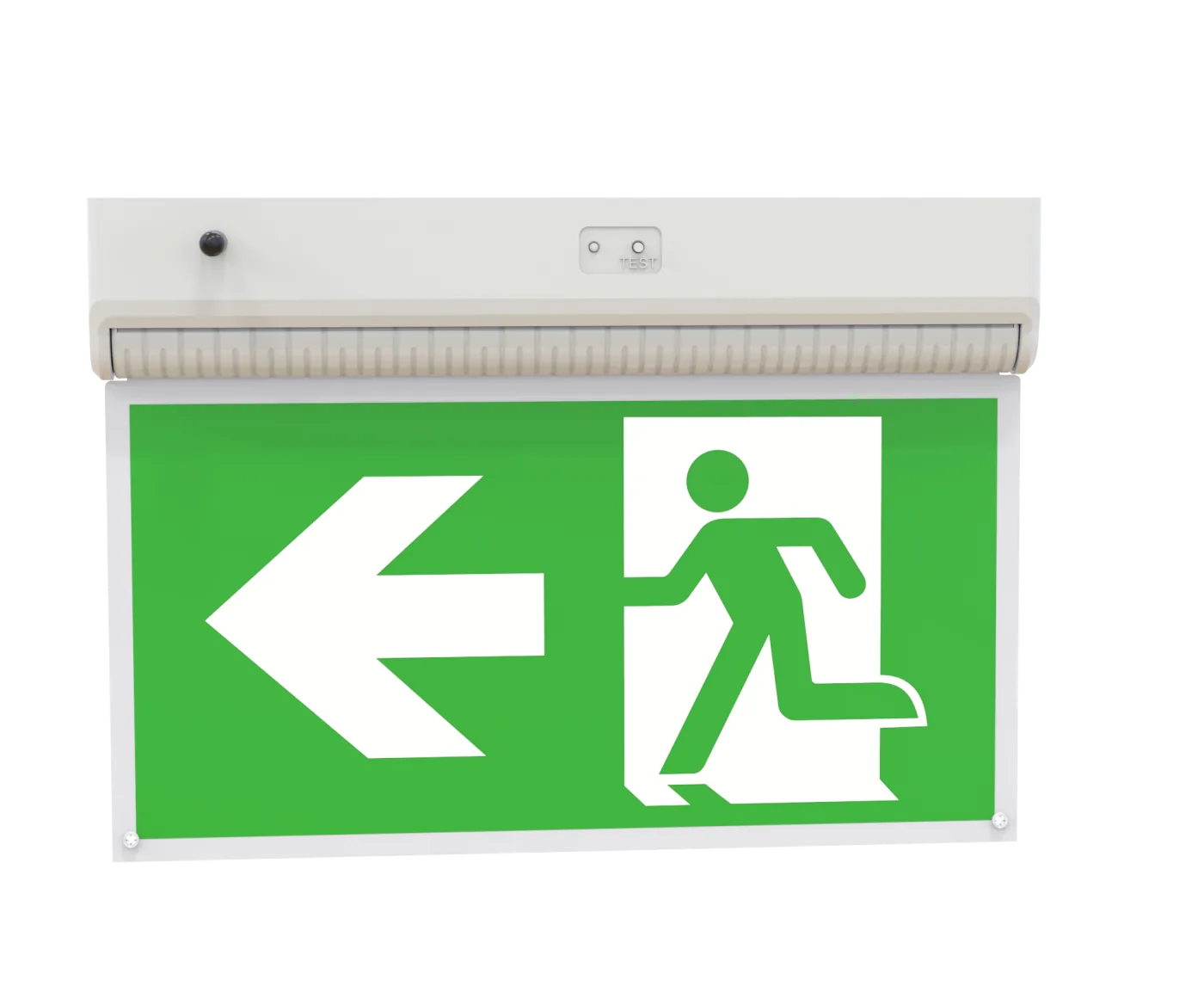
3DExit sign luminaire
Discreet LED exit sign luminaire for ceiling, wall, side or pendant mounting – up to 30 m viewing distance.
 3D
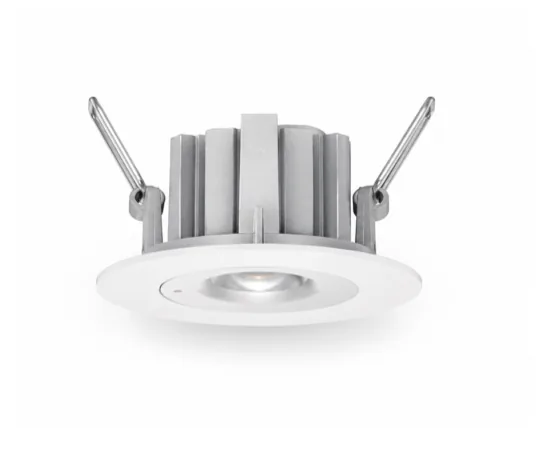
3DRecessed downlight
Compact emergency recessed luminaire for discreet ceiling integration, 500 lm in emergency mode.
 3D
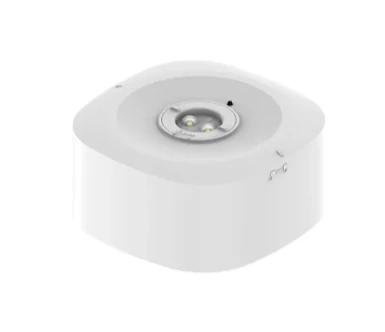
3DCompact emergency light
Compact emergency light for escape routes, recessed or surface-mounted, with interchangeable optics.
Frequently asked questions
Does a church need emergency lighting?
In Germany, worship spaces are generally exempt from the places of assembly regulations. Whether safety lighting is needed follows from the building permit, fire safety concept and actual use – for concerts and events, for example.
What applies in parish halls?
If the hall is used for more than 200 visitors, the places of assembly requirements often apply. Otherwise the building permit and fire safety concept define where safety lighting is needed.
How does emergency lighting work in listed buildings?
With self-contained luminaires with their own battery: no cabling to a central battery is needed and they can be placed discreetly. We agree positions with the heritage authority.
How are luminaires in high church interiors tested?
Via self-test: function and duration tests run automatically and results appear in the app. Scaffolding is only needed when something actually has to be replaced.
Who handles testing for the parish?
With the NOTLUX maintenance contract we take care of the annual on-site inspection, battery replacement and repairs – relieving volunteers and administration.
Related knowledge
Self-contained vs central battery emergency lighting
Self-contained, group battery or central battery? A system comparison for emergency lighting: installation, cabling, space, maintenance and typical uses.
Read articleUpgrading Emergency Lighting: LED, Self-Test, Emergency Drivers
When is upgrading emergency lighting worth it? Warning signs, LED benefits, retrofits with emergency drivers, the project process and how to avoid downtime.
Read articleWhen Is Emergency Lighting Required? Workplaces and Buildings
When is emergency lighting a legal requirement? EU workplace rules, building regulations and high-risk buildings explained, with Germany as a worked example.
Read articleOther building types
Your contacts


Emergency lighting without worries.
Luminaires, installation and maintenance from a single source – every inspection documented digitally in our app. We start with a free on-site survey and standard-compliant design.