Emergency lighting in workshops. So nobody stands in the dark at a machine.
In the workshop, machines run down, cars sit on the lift, chips and oil are on the floor. When it suddenly goes dark, it gets dangerous. We make sure hazardous workplaces have light immediately and everyone finds the exit – often using the luminaires already installed.
Workshops are workplaces: whether and where safety lighting is needed follows from the risk assessment. At high-risk task areas – such as machines that run down or vehicle lifts – EN 1838 requires at least 10% of normal illuminance, at least 15 lx, within 0.5 seconds. Escape routes need at least 1 lx and clearly visible exit signs.
What applies?
- Risk assessment under workplace legislation as the basis
- Safety lighting at high-risk task areas: 10% of normal lighting, at least 15 lx, within 0.5 s
- Escape route lighting with at least 1 lx and ISO 7010 exit signs
- Protection rating suited to dust, oil and moisture – often IP65
- Inspection pits, lifts and machine areas captured separately in the design
- Regular testing with a logbook – for insurers and occupational safety bodies
This describes typical requirements, using Germany as the reference. What applies to your building depends on the building permit, fire safety concept, risk assessment and national or regional rules – exactly what we check during the free on-site survey.
Common mistakes
Only the escape route is lit – at the saw, lathe or lift it stays dark.
Existing LED luminaires are replaced although an emergency driver would have done.
Tests are done but not documented. With the app every test is on record.
How we make it easy
We survey the building, escape routes and existing system and create a standard-compliant emergency lighting design – free and non-binding.
Exit sign, escape route and recessed luminaires plus emergency drivers – with self-test and LiFePO4 battery.
Every test documented digitally, deadlines monitored automatically – ready to show at any inspection.
Annual on-site inspection, all batteries replaced in year 5–6 and repairs – predictable costs instead of surprises.
Matching products
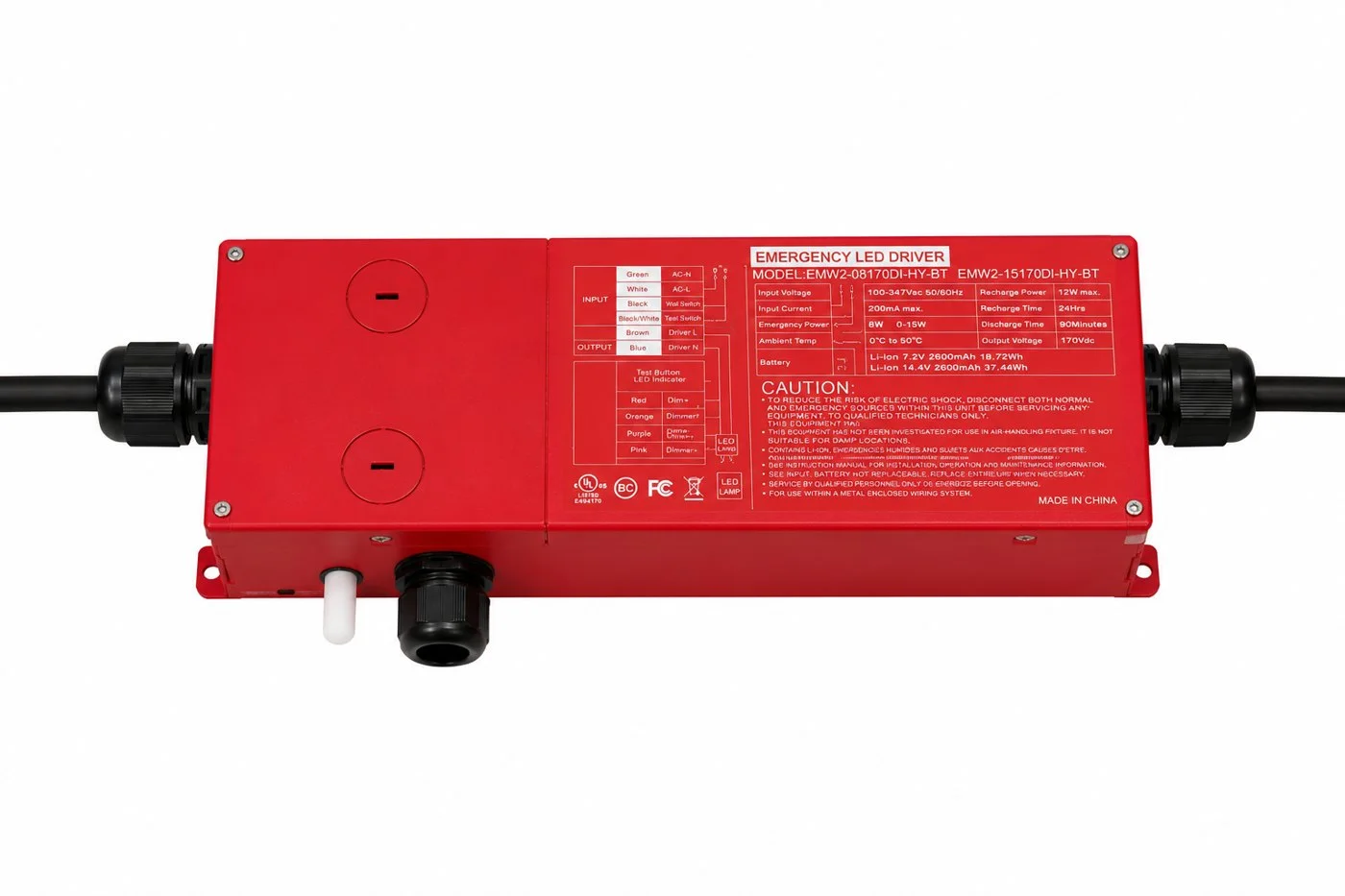
Emergency drivers
Self-contained emergency drivers with battery and self-test – for existing LED luminaires and LED high-bays up to 300 W.
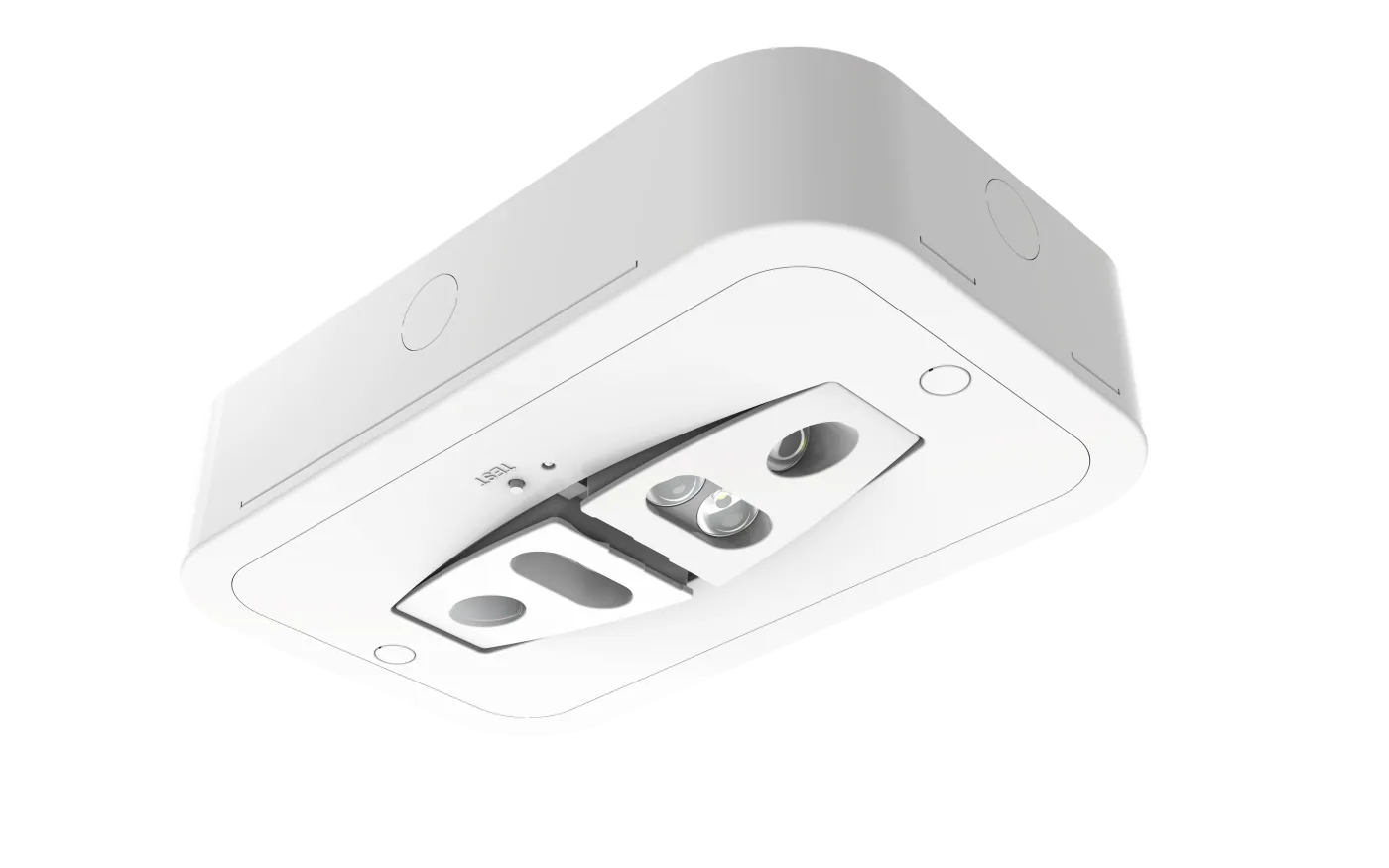 3D
3DEscape route luminaire
Surface-mounted luminaire for escape routes, light output adjustable to 90° or 180°.
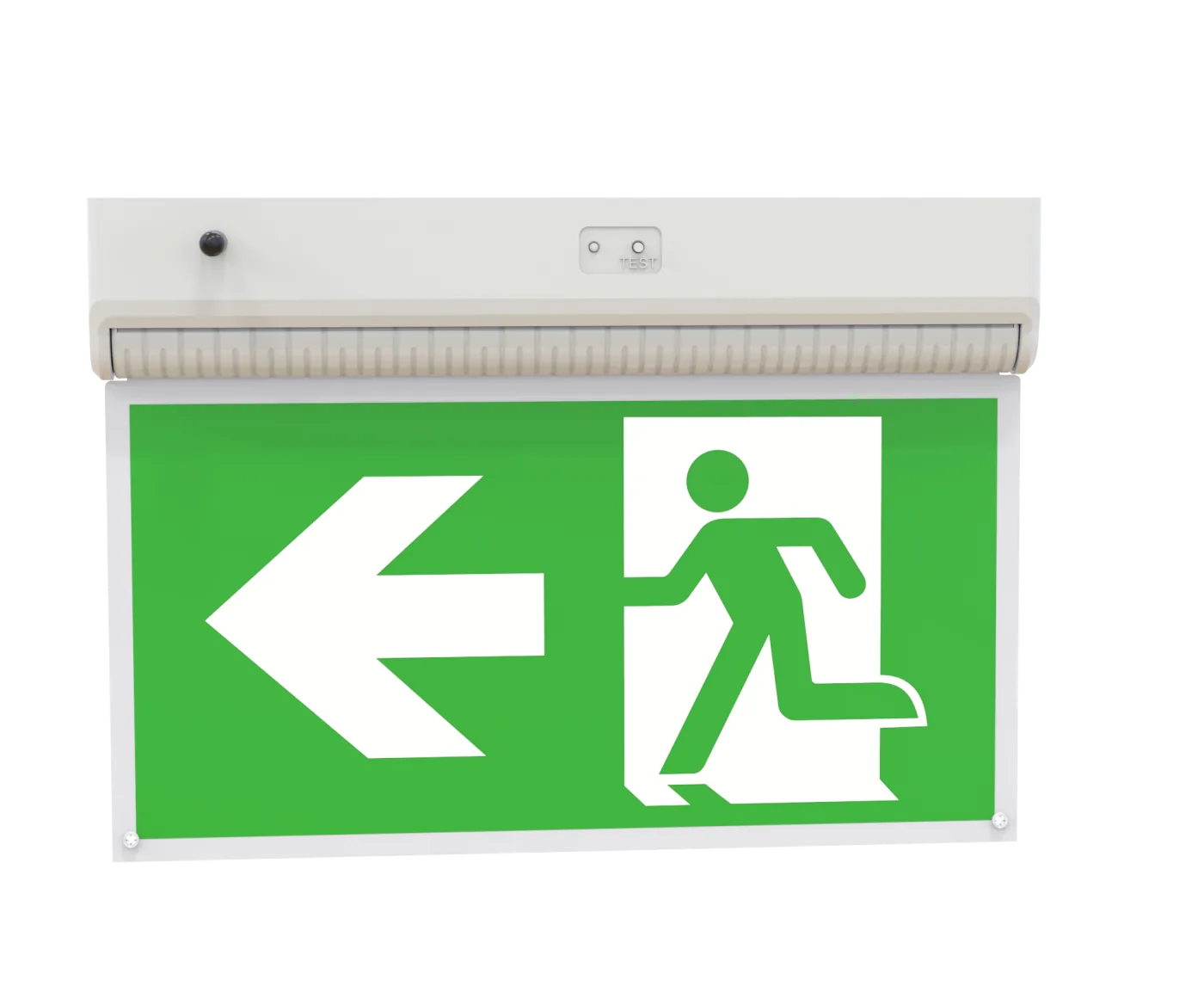 3D
3DExit sign luminaire
Discreet LED exit sign luminaire for ceiling, wall, side or pendant mounting – up to 30 m viewing distance.
Frequently asked questions
Does a workshop need emergency lighting?
That follows from the risk assessment. In workshops with machines, lifts or pits it often leads to safety lighting – at least at hazardous workplaces and on escape routes.
What applies at a lift or machine?
Where a sudden loss of light is dangerous, EN 1838 requires safety lighting with at least 10% of normal illuminance, at least 15 lx, within 0.5 seconds – so work can be ended safely.
Can existing workshop luminaires become emergency lighting?
Often, yes. Series 19 emergency drivers make existing LED luminaires emergency-capable – with their own battery, self-test and optionally IP65. We check on site whether the calculation works.
Which protection rating makes sense in a workshop?
With dust, oil or moisture often IP65. Paint shops and explosive atmospheres have special requirements that we look at separately.
What does emergency lighting for a workshop cost?
That depends on size, the number of hazardous workplaces and existing luminaires. After the free on-site survey you receive a fixed-price quote – often cheaper than expected when existing luminaires are retrofitted.
Related knowledge
Emergency Lighting Illuminance: Lux Levels per EN 1838
How bright must emergency lighting be? 1 lx, 0.5 lx, 15 lx, 5 lx: all EN 1838 lux levels, uniformity ratios and response times – with table and planning tips.
Read articleWhen Is Emergency Lighting Required? Workplaces and Buildings
When is emergency lighting a legal requirement? EU workplace rules, building regulations and high-risk buildings explained, with Germany as a worked example.
Read articleUpgrading Emergency Lighting: LED, Self-Test, Emergency Drivers
When is upgrading emergency lighting worth it? Warning signs, LED benefits, retrofits with emergency drivers, the project process and how to avoid downtime.
Read articleOther building types
Your contacts


Emergency lighting without worries.
Luminaires, installation and maintenance from a single source – every inspection documented digitally in our app. We start with a free on-site survey and standard-compliant design.