Emergency lighting in practices. Discreet for patients, safe in an emergency.
A practice is full of patients who don't know the building, some with limited mobility or in the middle of treatment. When the power fails, escape routes must be clear at once – and treatments must be able to end safely. We design this discreetly to suit your interior.
Medical practices are workplaces: whether safety lighting is needed follows from the risk assessment, the building permit and the fire safety concept. Medical locations of groups 1 and 2 – for example rooms for outpatient procedures or sedation – have their own requirements for the safety power supply (IEC 60364-7-710, in Germany DIN VDE 0100-710). ISO 7010 exit signs and escape route lighting to EN 1838 make sure patients and staff get out safely.
What applies?
- Escape route lighting and exit signs according to the risk assessment and workplace rules
- Requirements from the building permit and fire safety concept – e.g. in medical centres
- Medical locations of groups 1 and 2: safety power supply to IEC 60364-7-710, coordinated with the electrical designer
- Safety lighting where treatments must be ended safely if the light fails
- Accessible routes – patients with limited mobility need clearly visible paths
- Monthly and annual testing with a complete logbook
This describes typical requirements, using Germany as the reference. What applies to your building depends on the building permit, fire safety concept, risk assessment and national or regional rules – exactly what we check during the free on-site survey.
Common mistakes
Only the corridor is planned – yet a running treatment must be ended safely during a power cut.
Bulky exit signs get covered or left out. Slim luminaires solve this.
The logbook is missing at inspections – with the app every test is on record.
How we make it easy
We survey the building, escape routes and existing system and create a standard-compliant emergency lighting design – free and non-binding.
Exit sign, escape route and recessed luminaires plus emergency drivers – with self-test and LiFePO4 battery.
Every test documented digitally, deadlines monitored automatically – ready to show at any inspection.
Annual on-site inspection, all batteries replaced in year 5–6 and repairs – predictable costs instead of surprises.
Matching products
 3D
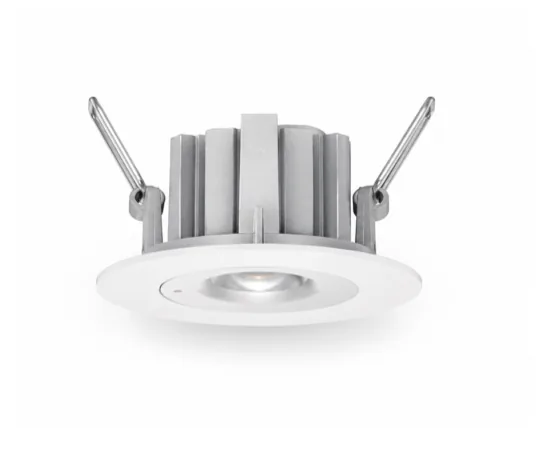
3DRecessed downlight
Compact emergency recessed luminaire for discreet ceiling integration, 500 lm in emergency mode.
 3D
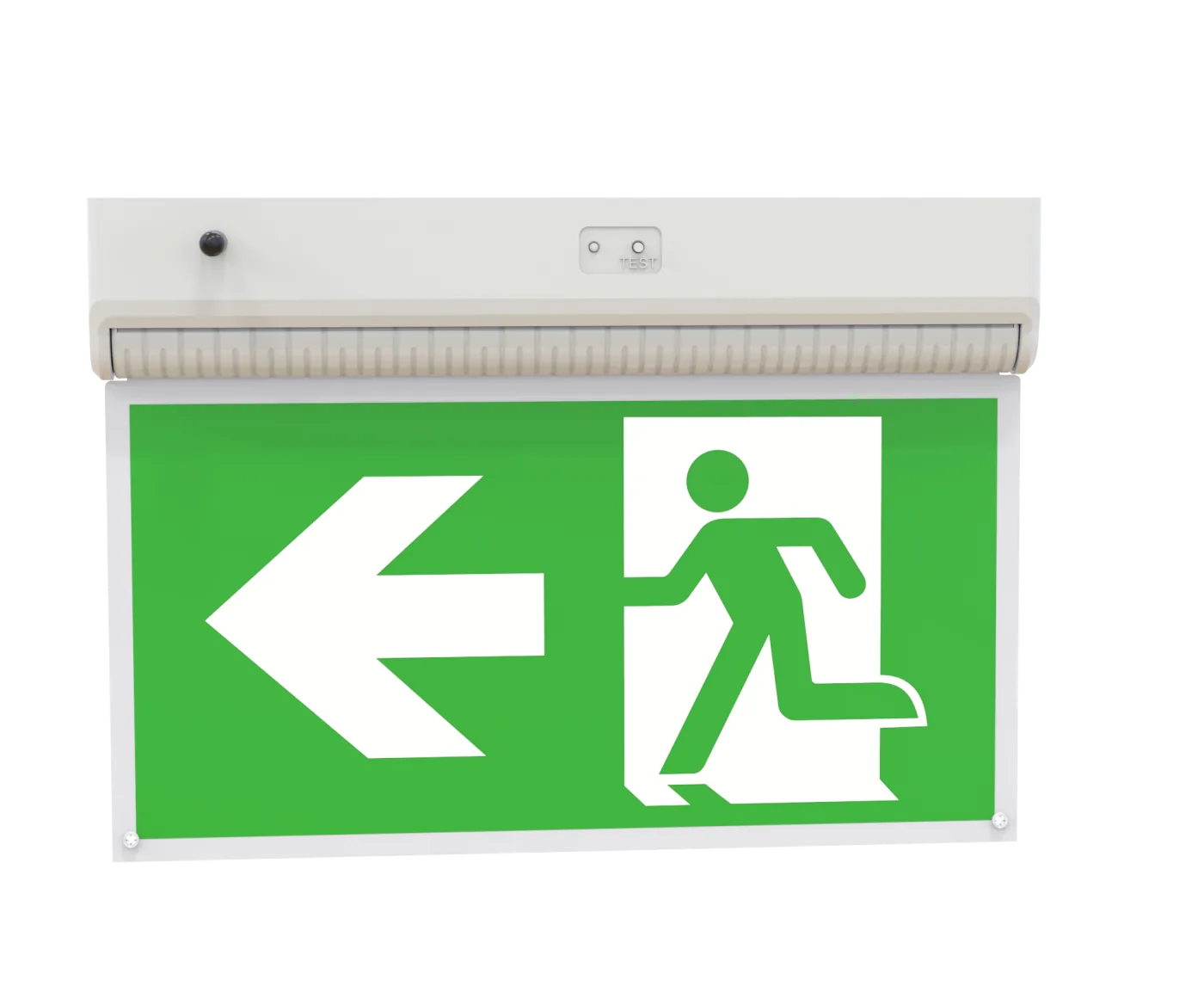
3DExit sign luminaire
Discreet LED exit sign luminaire for ceiling, wall, side or pendant mounting – up to 30 m viewing distance.
 3D
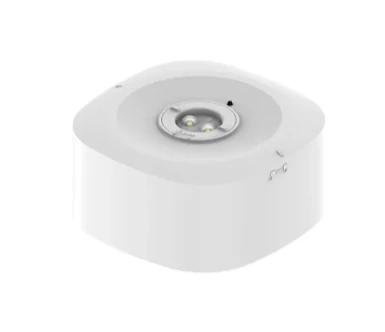
3DCompact emergency light
Compact emergency light for escape routes, recessed or surface-mounted, with interchangeable optics.
Frequently asked questions
Does a medical practice need emergency lighting?
That follows from the risk assessment, building permit and fire safety concept. In many practices – especially in larger medical centres, with corridors without daylight or with outpatient procedures – safety lighting is required or strongly advisable.
What does IEC 60364-7-710 cover?
It sets requirements for electrical installations in medical locations, divided into groups 0, 1 and 2 depending on how much a treatment depends on the power supply. Groups 1 and 2 have specific safety power supply requirements, defined with the electrical designer.
Does this apply to dental practices?
Yes, dental practices are workplaces too. If procedures under sedation or outpatient surgery are performed, the requirements for medical locations apply as well.
Will patients notice the emergency lights?
Hardly. The Series 19 recessed downlight is only 38 mm high and almost disappears into the ceiling; exit sign luminaires are slim and available for ceiling, wall or pendant mounting.
Who takes care of the tests?
With the NOTLUX maintenance contract we handle the annual on-site inspection, battery replacement and repairs. Monthly function tests run via self-test and are documented in the app.
Related knowledge
When Is Emergency Lighting Required? Workplaces and Buildings
When is emergency lighting a legal requirement? EU workplace rules, building regulations and high-risk buildings explained, with Germany as a worked example.
Read articleEmergency Lighting Operator Duties: Responsibility and Liability
Who is responsible for emergency lighting? Operator duties, delegating to contractors, record-keeping, fines, insurance and liability explained for Europe.
Read articlePlanning Emergency Lighting: A Step-by-Step Design Guide
How is emergency lighting planned? From fire strategy and escape route plan to photometric calculation with LDT files and handover – plus common mistakes.
Read articleOther building types
Your contacts


Emergency lighting without worries.
Luminaires, installation and maintenance from a single source – every inspection documented digitally in our app. We start with a free on-site survey and standard-compliant design.