Emergency lighting in schools. So every child gets out safely.
Schools and nurseries have many children in the building at once – in class, in the assembly hall, in the gym. During a power cut or fire alarm, everyone must get out quickly and calmly. We design escape routes, exit signs and safety lighting to make that work – and keep testing on track during the holidays.
In Germany, schools are special buildings in most states; school building guidelines set requirements for escape routes and safety lighting, and assembly halls and gyms for more than 200 people may also fall under the places of assembly regulations. For nurseries, requirements follow from state law, building permit and fire safety concept. Technically, EN 1838 and EN 50172 apply; special buildings are inspected periodically by experts. Other countries have comparable rules.
What applies?
- Escape route lighting in corridors and stairwells according to school building rules or the fire safety concept
- ISO 7010 exit signs – clearly recognisable, also for children
- Assembly halls and gyms: places of assembly rules for more than 200 visitors, anti-panic lighting
- Ball-impact-resistant luminaires or protective guards in sports halls
- Periodic expert inspection in special buildings
- Monthly and annual tests – also during holidays – with a logbook
This describes typical requirements, using Germany as the reference. What applies to your building depends on the building permit, fire safety concept, risk assessment and national or regional rules – exactly what we check during the free on-site survey.
Common mistakes
The caretaker is away, the building empty – and the monthly test is missed. Self-test keeps running.
Graduations and performances have different requirements than lessons.
Without ball-impact protection, emergency luminaires in sports halls break quickly.
How we make it easy
We survey the building, escape routes and existing system and create a standard-compliant emergency lighting design – free and non-binding.
Exit sign, escape route and recessed luminaires plus emergency drivers – with self-test and LiFePO4 battery.
Every test documented digitally, deadlines monitored automatically – ready to show at any inspection.
Annual on-site inspection, all batteries replaced in year 5–6 and repairs – predictable costs instead of surprises.
Matching products
 3D
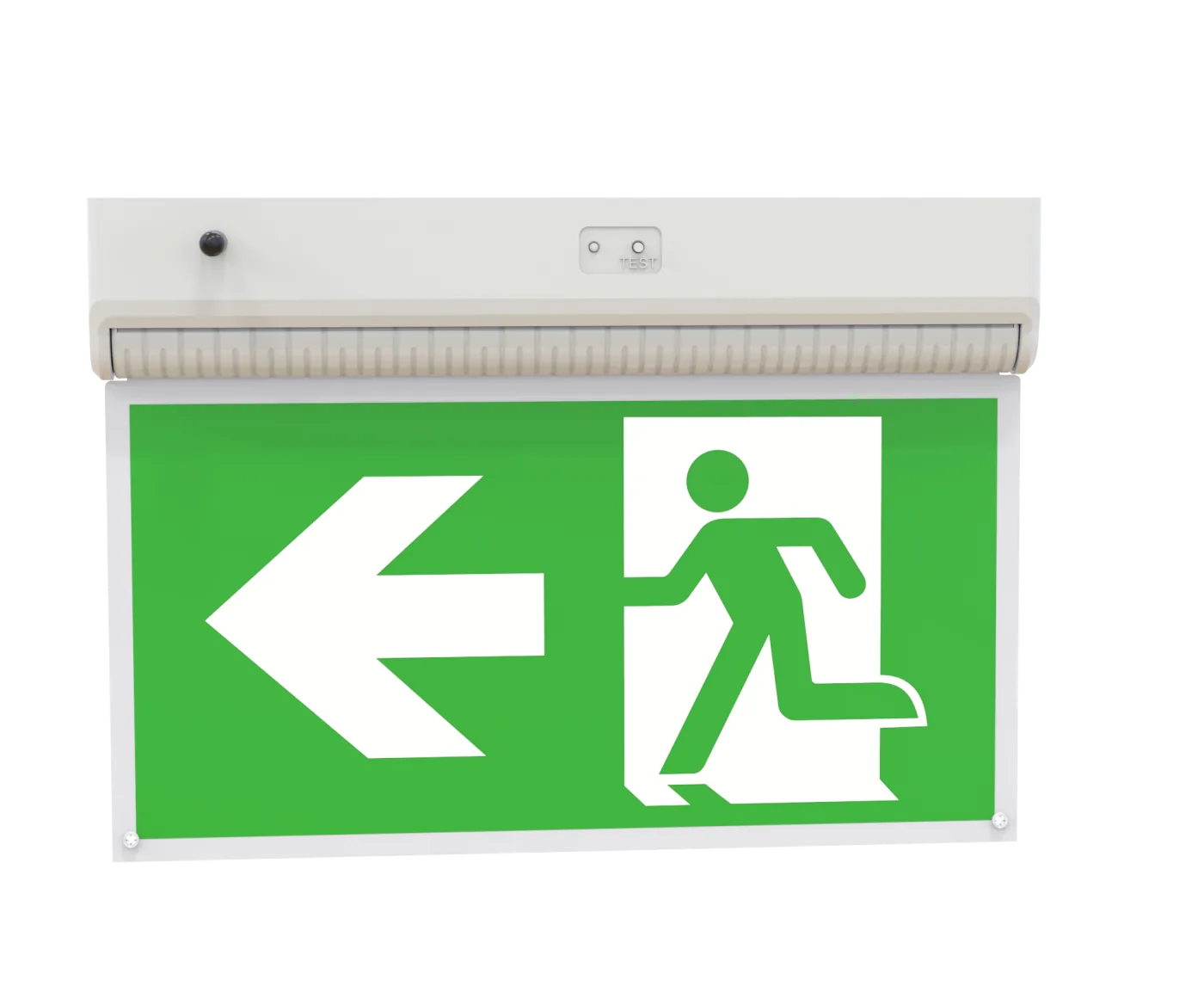
3DExit sign luminaire
Discreet LED exit sign luminaire for ceiling, wall, side or pendant mounting – up to 30 m viewing distance.
 3D
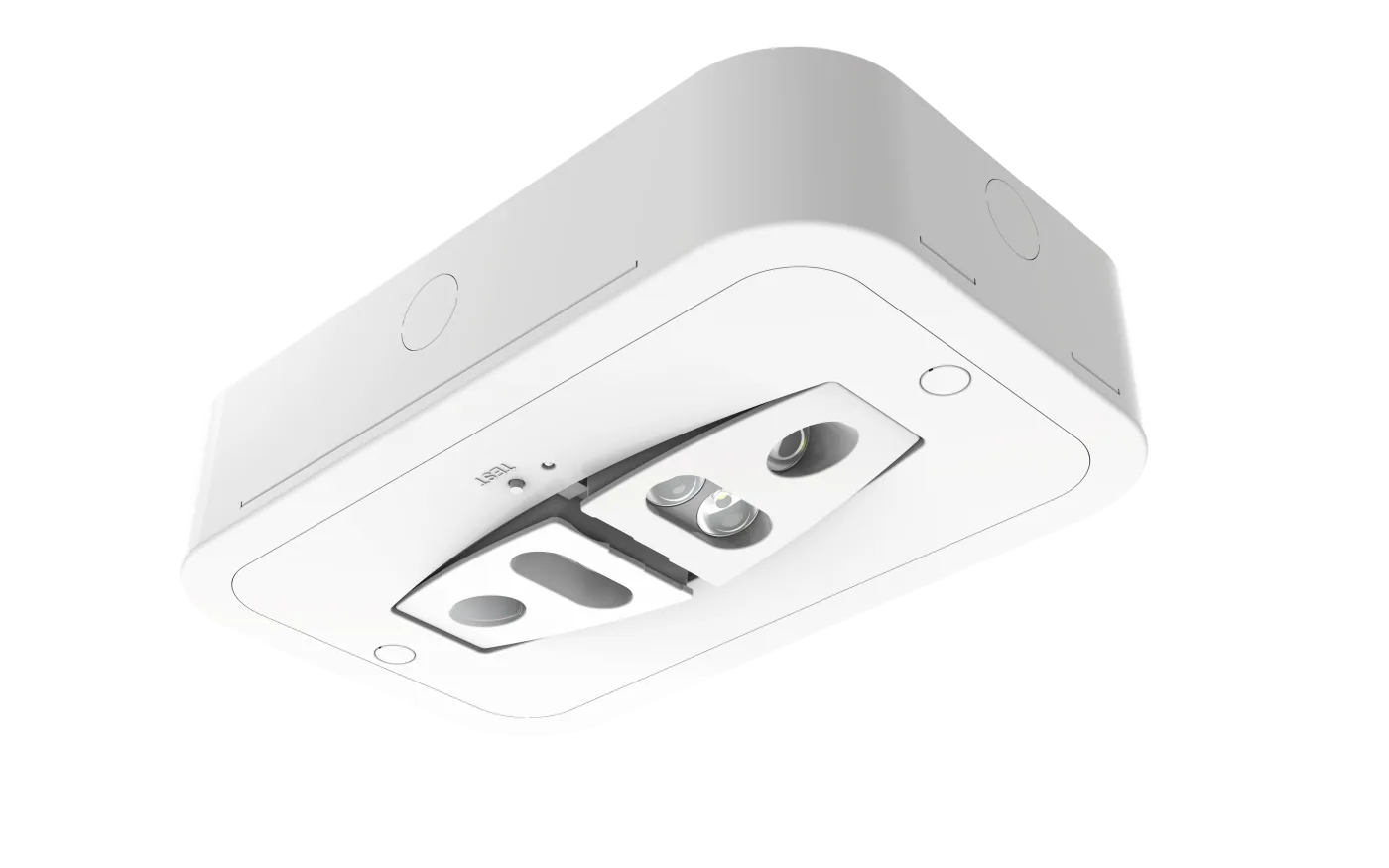
3DEscape route luminaire
Surface-mounted luminaire for escape routes, light output adjustable to 90° or 180°.
 3D
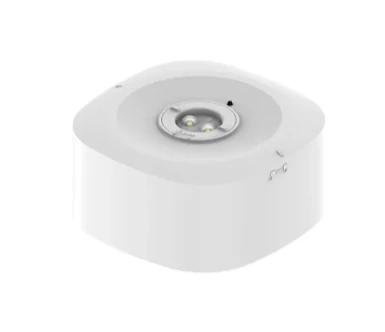
3DCompact emergency light
Compact emergency light for escape routes, recessed or surface-mounted, with interchangeable optics.
Frequently asked questions
Does a school need emergency lighting?
As a rule, yes. Schools are special buildings in most German states, and school building rules or fire safety concepts require safety lighting at least for escape routes and stairwells as well as assembly halls and gyms.
Does a nursery need emergency lighting?
That depends on size, building and local rules and follows from the building permit and fire safety concept. Because small children cannot get to safety on their own, well-designed escape route lighting is usually sensible.
When is an assembly hall a place of assembly?
When the room is intended for more than 200 visitors, the places of assembly regulations generally apply – for example at graduations or theatre performances.
How are emergency luminaires in gyms protected?
With ball-impact-resistant luminaires or protective guards. We take this into account in the design so the safety lighting doesn't fail at the first ball game.
How does testing work during holidays?
Self-test luminaires test themselves and results appear in the app. With the maintenance contract we handle the annual on-site inspection and battery replacement – regardless of the school calendar.
Related knowledge
When Is Emergency Lighting Required? Workplaces and Buildings
When is emergency lighting a legal requirement? EU workplace rules, building regulations and high-risk buildings explained, with Germany as a worked example.
Read articleAnti-Panic Lighting to EN 1838: Requirements and Design Guide
Anti-panic (open area) lighting to EN 1838: 0.5 lx on the core area excluding a 0.5 m border, 40:1 uniformity, where it is needed, design tips and luminaires.
Read articleEmergency Lighting Testing Intervals: Daily, Monthly, Annual
How often must emergency lighting be tested? Daily, monthly and annual test intervals under EN 50172, with national examples, a clear table and practical tips.
Read articleOther building types
Your contacts


Emergency lighting without worries.
Luminaires, installation and maintenance from a single source – every inspection documented digitally in our app. We start with a free on-site survey and standard-compliant design.