Emergency lighting in logistics centres. Every aisle, every gate.
In a warehouse routes are long, racks high and forklifts on the move. In a power cut everyone – including drivers and contractors at the gates – must see at once where to go. We design escape routes and exit signs for large areas and retrofit existing high-bays with emergency drivers – most recently in two halls totalling around 5,000 m² in Thuringia.
In warehouses and logistics halls, safety lighting follows from the risk assessment and, for larger halls, from industrial building rules and the fire safety concept. Escape routes between racks need at least 1 lx on the centre line, and exit signs must be recognisable from far away. At high-risk task areas – such as conveyors – EN 1838 requires at least 15 lx within 0.5 seconds.
What applies?
- Escape route lighting between rack rows and along main aisles – at least 1 lx on the centre line
- Exit signs with long viewing distances, visible across racks and aisles
- Safety lighting at conveyors and other high-risk task areas
- Loading docks and gates: safe routes for drivers and contractors too
- Observe the temperature range – in cold stores, luminaires rated for the room
- Testing high-mounted luminaires via self-test instead of a lift
This describes typical requirements, using Germany as the reference. What applies to your building depends on the building permit, fire safety concept, risk assessment and national or regional rules – exactly what we check during the free on-site survey.
Common mistakes
New racks hide exit signs and shade routes – the design is not updated.
In large halls standard viewing distances are not enough – signs are not seen.
Every test needs a lift – so testing rarely happens. Self-test solves this.
How we make it easy
We survey the building, escape routes and existing system and create a standard-compliant emergency lighting design – free and non-binding.
Exit sign, escape route and recessed luminaires plus emergency drivers – with self-test and LiFePO4 battery.
Every test documented digitally, deadlines monitored automatically – ready to show at any inspection.
Annual on-site inspection, all batteries replaced in year 5–6 and repairs – predictable costs instead of surprises.
Matching products
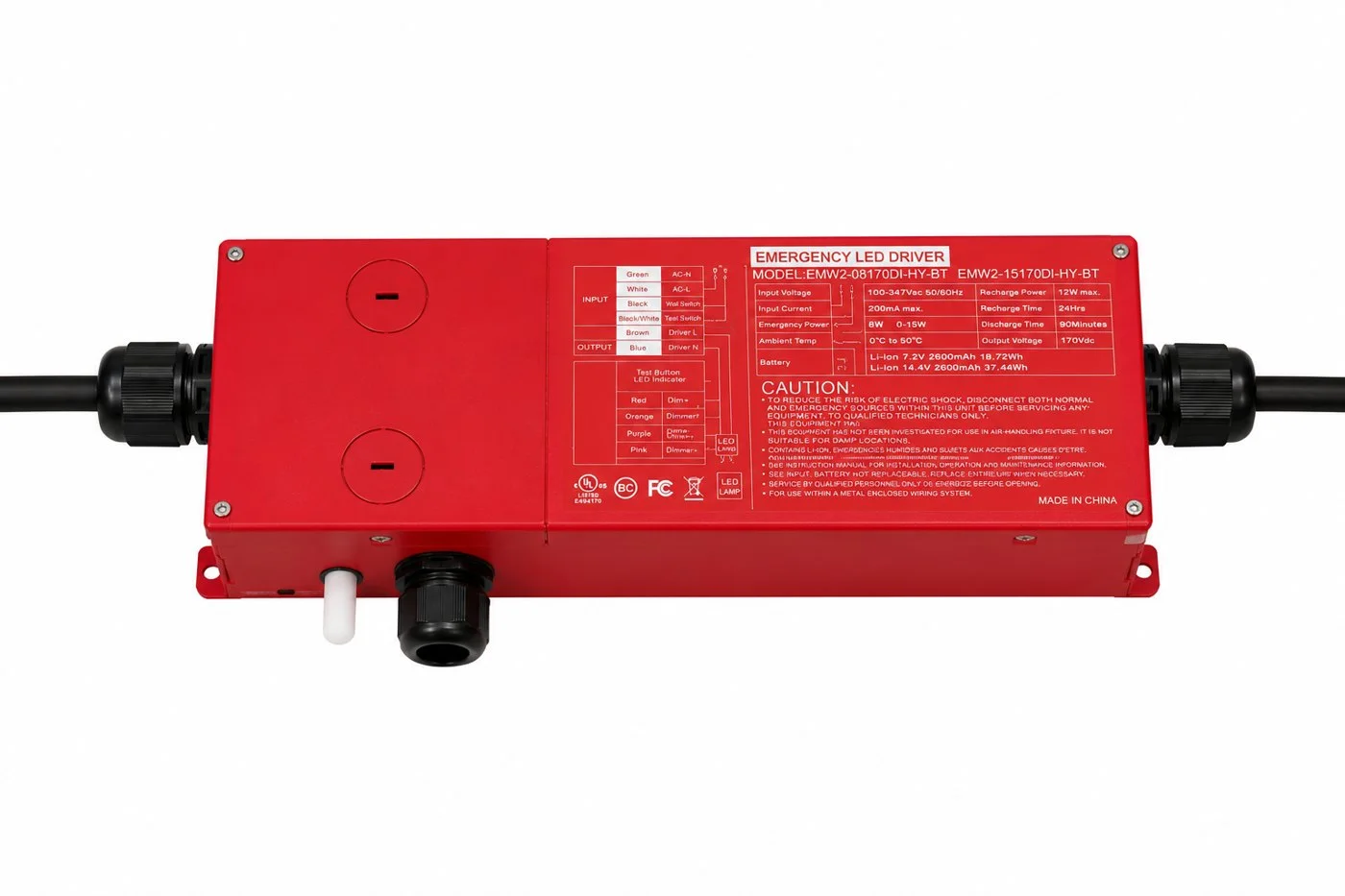
Emergency drivers
Self-contained emergency drivers with battery and self-test – for existing LED luminaires and LED high-bays up to 300 W.
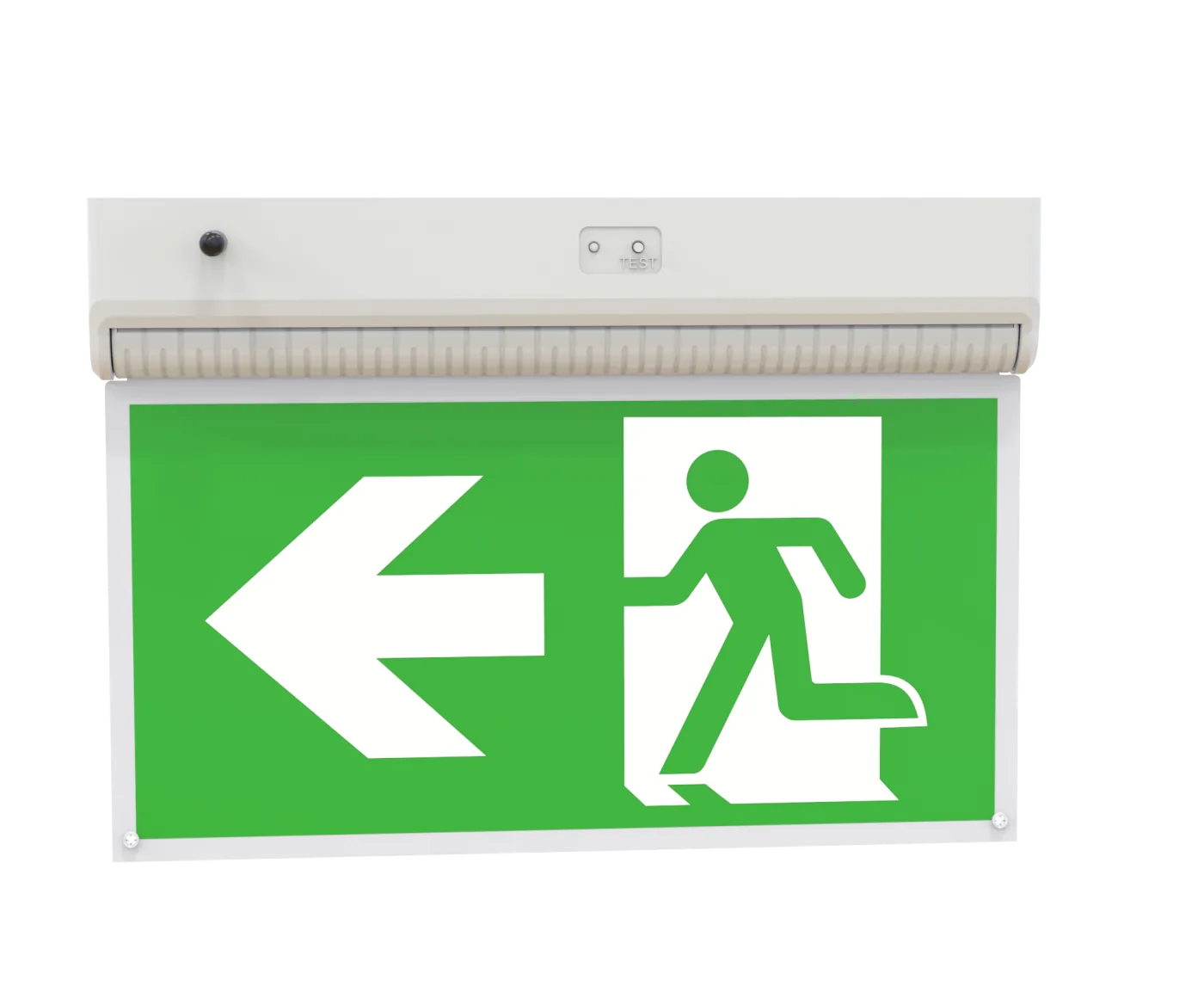 3D
3DExit sign luminaire
Discreet LED exit sign luminaire for ceiling, wall, side or pendant mounting – up to 30 m viewing distance.
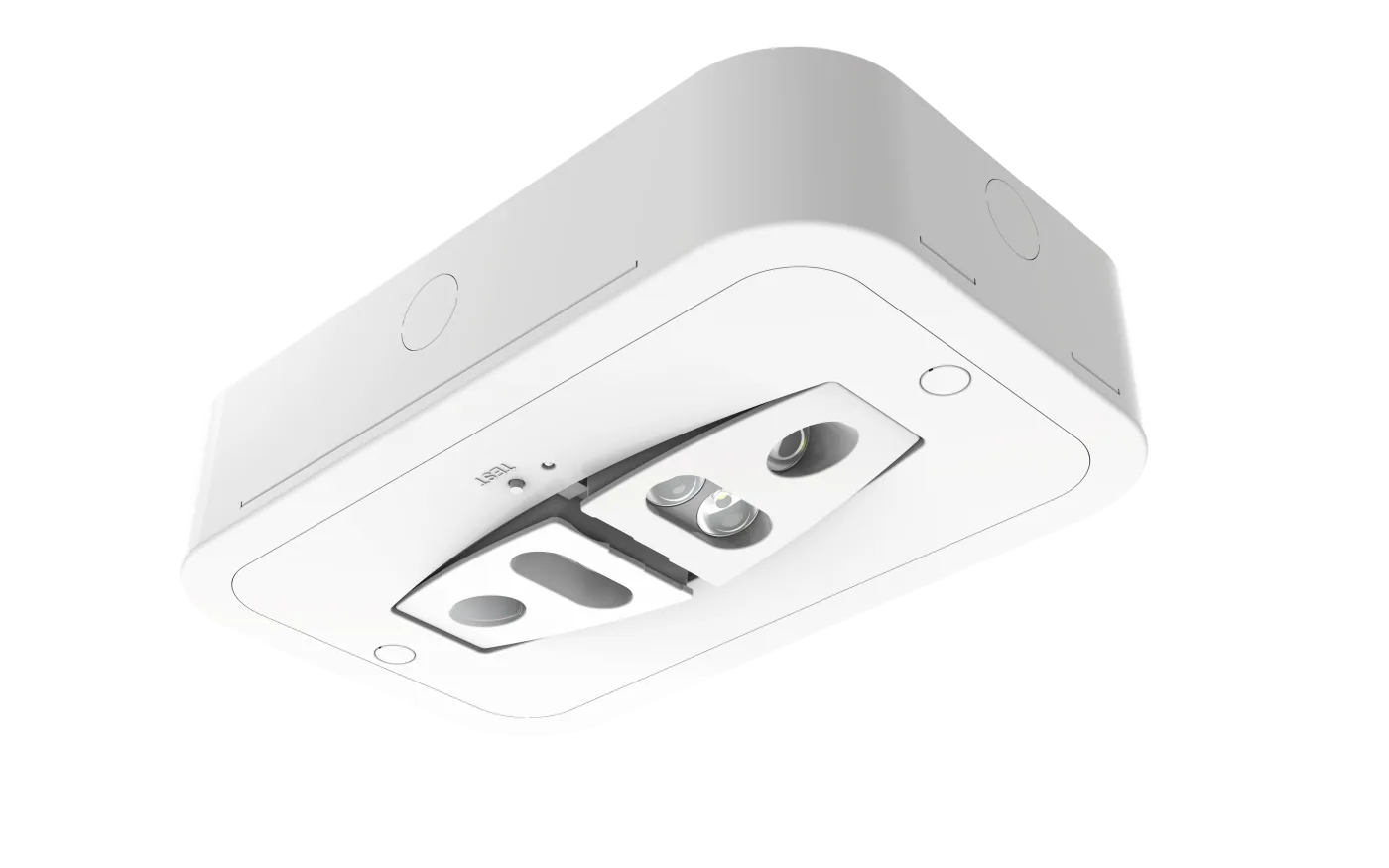 3D
3DEscape route luminaire
Surface-mounted luminaire for escape routes, light output adjustable to 90° or 180°.
Frequently asked questions
Does a logistics hall need emergency lighting?
In most cases yes: large areas, racking, vehicle traffic and long routes regularly lead to safety lighting in the risk assessment; larger halls also require it under industrial building rules and the fire safety concept.
How large must exit signs be in halls?
Large enough to be recognised from the greatest viewing distance. Illuminated exit signs reach longer viewing distances than photoluminescent ones. Our exit sign luminaire is designed for up to 30 m; for longer distances we plan additional signs.
Can existing high-bays become emergency lighting?
Often, yes – with the emergency driver for LED high-bays up to 300 W in IP65, with battery and self-test. We check on site whether the calculation works.
What applies in cold stores?
Cold reduces battery capacity. For cold areas we choose luminaires and drivers rated for the room temperature; freezer areas need dedicated solutions.
Do you have experience with large halls?
Yes. We recently delivered the emergency lighting for two halls of a logistics and manufacturing company in Thuringia totalling around 5,000 m²; a logistics hall in Hesse of around 2,000 m² is in preparation.
Related knowledge
Exit Sign Viewing Distance: Size, Placement and ISO 7010
How large must an exit sign be? Calculate viewing distance per EN 1838, place ISO 7010 signs correctly and replace outdated pictograms – with worked examples.
Read articleAnti-Panic Lighting to EN 1838: Requirements and Design Guide
Anti-panic (open area) lighting to EN 1838: 0.5 lx on the core area excluding a 0.5 m border, 40:1 uniformity, where it is needed, design tips and luminaires.
Read articleUpgrading Emergency Lighting: LED, Self-Test, Emergency Drivers
When is upgrading emergency lighting worth it? Warning signs, LED benefits, retrofits with emergency drivers, the project process and how to avoid downtime.
Read articleOther building types
Your contacts


Emergency lighting without worries.
Luminaires, installation and maintenance from a single source – every inspection documented digitally in our app. We start with a free on-site survey and standard-compliant design.