Emergency lighting in shopping centres. For hundreds of people at once.
A shopping centre holds many people who barely know the building – on several levels, in malls and in shops run by different tenants. In a power cut orientation must be right immediately. We design the safety lighting for the entire property and keep it fully documented with self-test and a digital logbook – even across tenant changes.
In Germany, shopping centres and department stores are generally retail premises under the state regulations that apply to sales areas and malls totalling more than 2,000 m². They require, among other things, safety lighting in sales areas, malls and escape routes as well as illuminated exit signs. Systems are inspected by approved experts, and the required duration is often 3 hours. Other countries have comparable rules; the building permit and fire safety concept are decisive.
What applies?
- Safety lighting in sales areas, malls, stairwells and escape routes under the retail premises rules
- Illuminated ISO 7010 exit signs – visible despite advertising, shelving and decoration
- Anti-panic lighting in large sales areas without defined escape routes
- Duration as required – often 3 hours
- Periodic expert inspection and checks at fire inspections
- Consistent documentation for centre management and all tenant areas
This describes typical requirements, using Germany as the reference. What applies to your building depends on the building permit, fire safety concept, risk assessment and national or regional rules – exactly what we check during the free on-site survey.
Common mistakes
Banners, displays and decoration cover exit signs – a classic at fire inspections.
Tenants refit their units and the emergency lighting is not adjusted.
Every tenant tests differently – in the end the overall proof is missing.
How we make it easy
We survey the building, escape routes and existing system and create a standard-compliant emergency lighting design – free and non-binding.
Exit sign, escape route and recessed luminaires plus emergency drivers – with self-test and LiFePO4 battery.
Every test documented digitally, deadlines monitored automatically – ready to show at any inspection.
Annual on-site inspection, all batteries replaced in year 5–6 and repairs – predictable costs instead of surprises.
Matching products
 3D
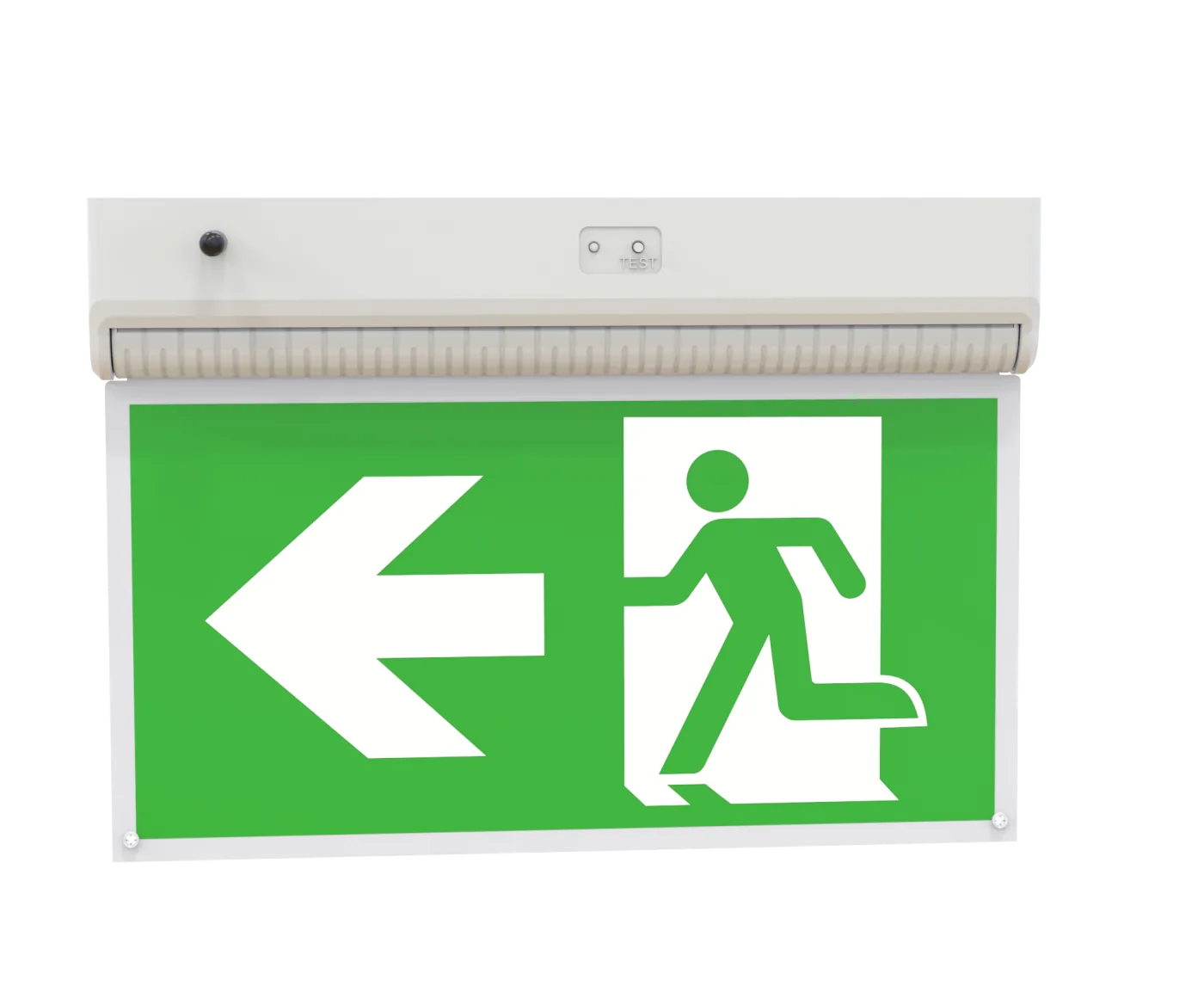
3DExit sign luminaire
Discreet LED exit sign luminaire for ceiling, wall, side or pendant mounting – up to 30 m viewing distance.
 3D
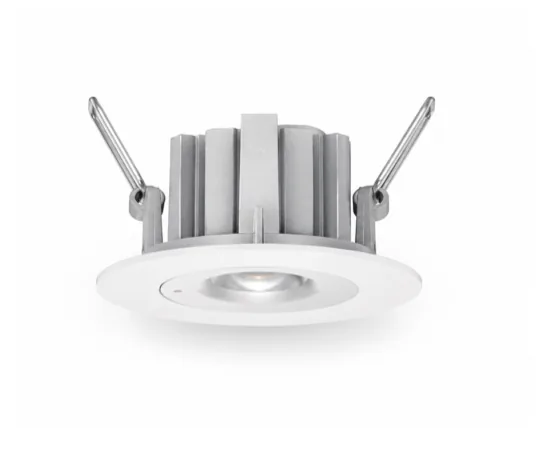
3DRecessed downlight
Compact emergency recessed luminaire for discreet ceiling integration, 500 lm in emergency mode.
 3D
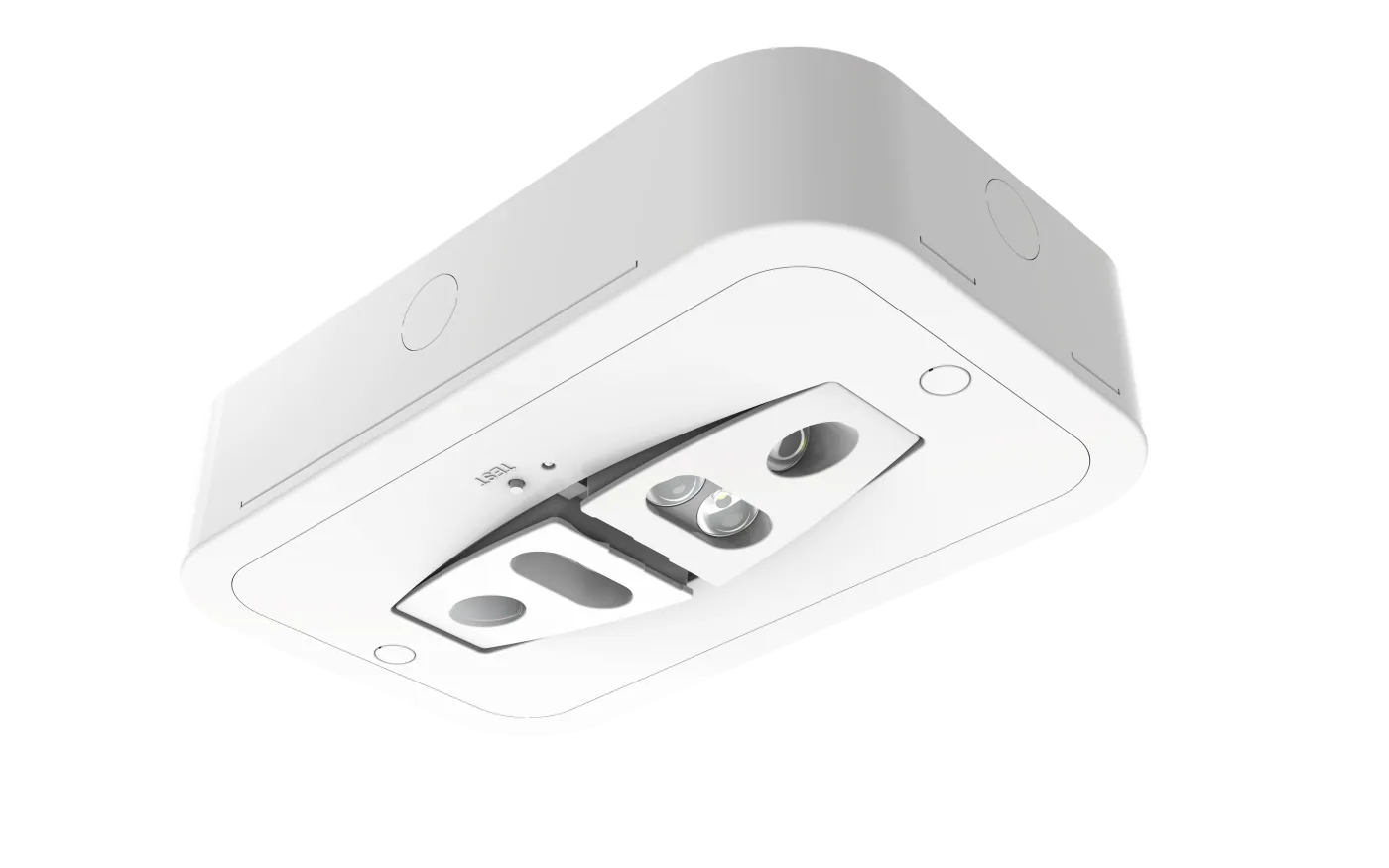
3DEscape route luminaire
Surface-mounted luminaire for escape routes, light output adjustable to 90° or 180°.
Frequently asked questions
When do retail premises rules apply?
In Germany, to retail premises whose sales areas and malls total more than 2,000 m². Details are set by the state regulations.
Which areas need safety lighting?
In particular sales areas, malls, stairwells and escape routes, plus illuminated exit signs. The exact areas are set by the regulation, building permit and fire safety concept.
Who is responsible – centre or tenant?
That is governed by the lease and operator duties. Often the owner or centre management is responsible for the overall system and tenants for their units. A uniform system with a central logbook makes responsibilities clear.
How long must emergency lighting in a shopping centre operate?
Retail premises often require a duration of 3 hours. Series 19 luminaires are designed for up to 3 hours.
How is testing done during operation?
Self-test luminaires test themselves outside opening hours and results appear in the app. Proof is available for inspectors at any time.
Related knowledge
Anti-Panic Lighting to EN 1838: Requirements and Design Guide
Anti-panic (open area) lighting to EN 1838: 0.5 lx on the core area excluding a 0.5 m border, 40:1 uniformity, where it is needed, design tips and luminaires.
Read articleEmergency Lighting Inspections by Authorities and Experts
What do fire authority inspections and certified experts check on emergency lighting? Inspection cycles, a preparation checklist and consequences of defects.
Read articleEmergency lighting duration: 1 hour, 3 hours or 8 hours?
How long must emergency lighting stay on? Rated duration of 1 h, 3 h and 8 h, typical buildings, workplaces, the annual duration test and recharge time.
Read articleOther building types
Your contacts


Emergency lighting without worries.
Luminaires, installation and maintenance from a single source – every inspection documented digitally in our app. We start with a free on-site survey and standard-compliant design.