Emergency lighting in cold stores. Where cold and condensation count.
In food logistics, temperatures change within a few metres: cold rooms, ante-rooms, picking areas and loading docks with open gates. Cold reduces battery capacity, and condensation forms at transitions. We design the emergency lighting zone by zone – with luminaires whose temperature range matches the room.
Cold stores and food warehouses are workplaces: safety lighting follows from the risk assessment and, for larger halls, from industrial building rules and the fire safety concept. Escape routes need at least 1 lx on the centre line to EN 1838. The temperature range is decisive: Series 19 luminaires are specified for 0 to 55 °C ambient – freezer areas below 0 °C need luminaires explicitly approved for sub-zero temperatures.
What applies?
- Escape route lighting through cold rooms, ante-rooms and picking areas – at least 1 lx on the centre line
- Temperature range of every luminaire matched to its zone – Series 19 for 0 to 55 °C, compact emergency light for 0 to 45 °C
- Freezer areas below 0 °C only with luminaires explicitly approved for sub-zero temperatures
- Protection rating suited to condensation, cleaning and moisture – often IP65 at transitions and docks
- Safety lighting at conveyors, sorters and other high-risk task areas: at least 15 lx within 0.5 s
- Exit signs at cold room doors and loading docks, recognisable for drivers and contractors too
This describes typical requirements, using Germany as the reference. What applies to your building depends on the building permit, fire safety concept, risk assessment and national or regional rules – exactly what we check during the free on-site survey.
Common mistakes
Luminaires outside their temperature range do not reach their duration – the defect only shows at testing.
Moisture settles between cold room and ante-room – luminaires without a suitable rating fail.
Nobody wants to check every luminaire by hand in the cold. Self-test and app do it in the background.
How we make it easy
We survey the building, escape routes and existing system and create a standard-compliant emergency lighting design – free and non-binding.
Exit sign, escape route and recessed luminaires plus emergency drivers – with self-test and LiFePO4 battery.
Every test documented digitally, deadlines monitored automatically – ready to show at any inspection.
Annual on-site inspection, all batteries replaced in year 5–6 and repairs – predictable costs instead of surprises.
Matching products
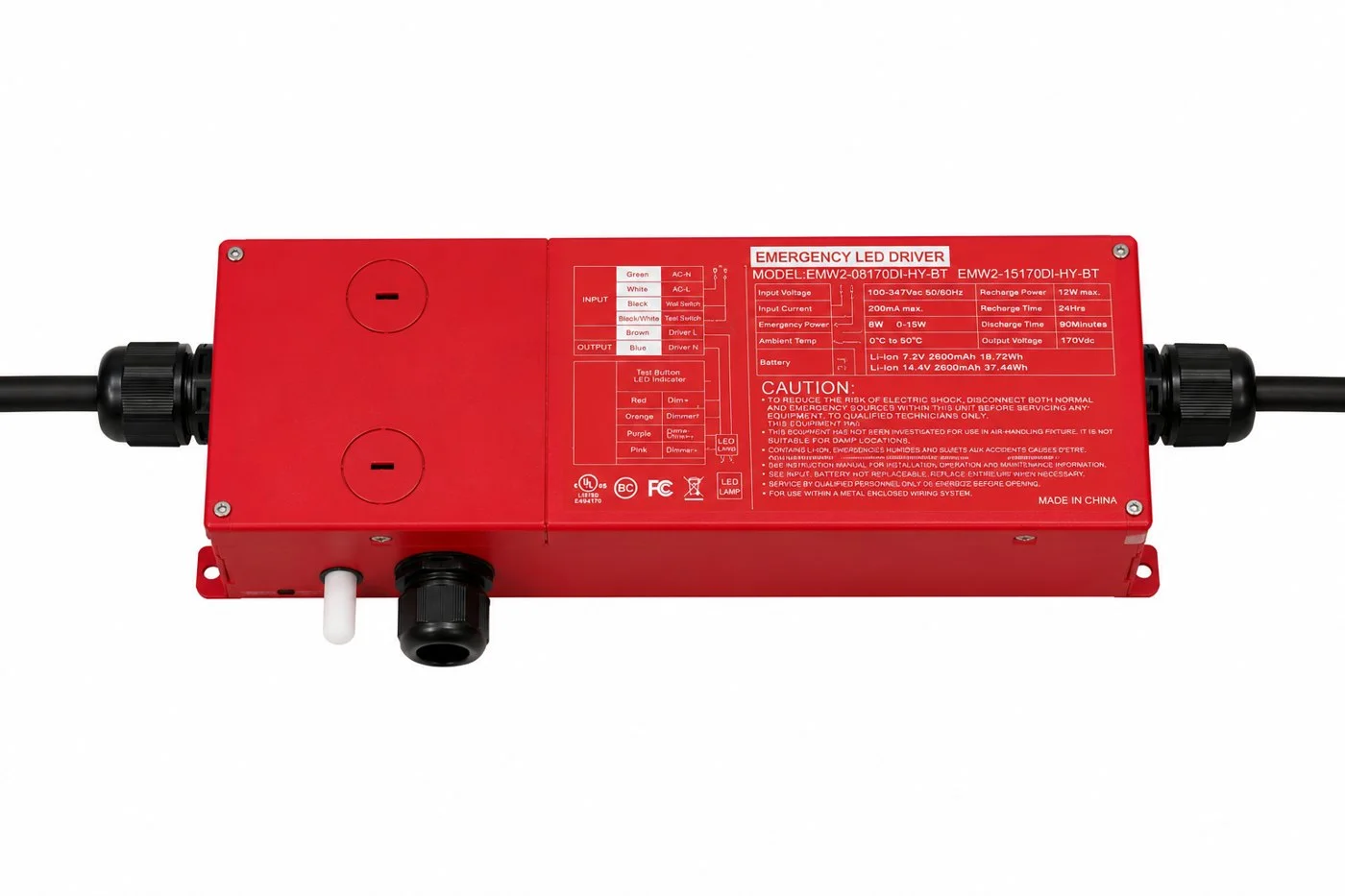
Emergency drivers
Self-contained emergency drivers with battery and self-test – for existing LED luminaires and LED high-bays up to 300 W.
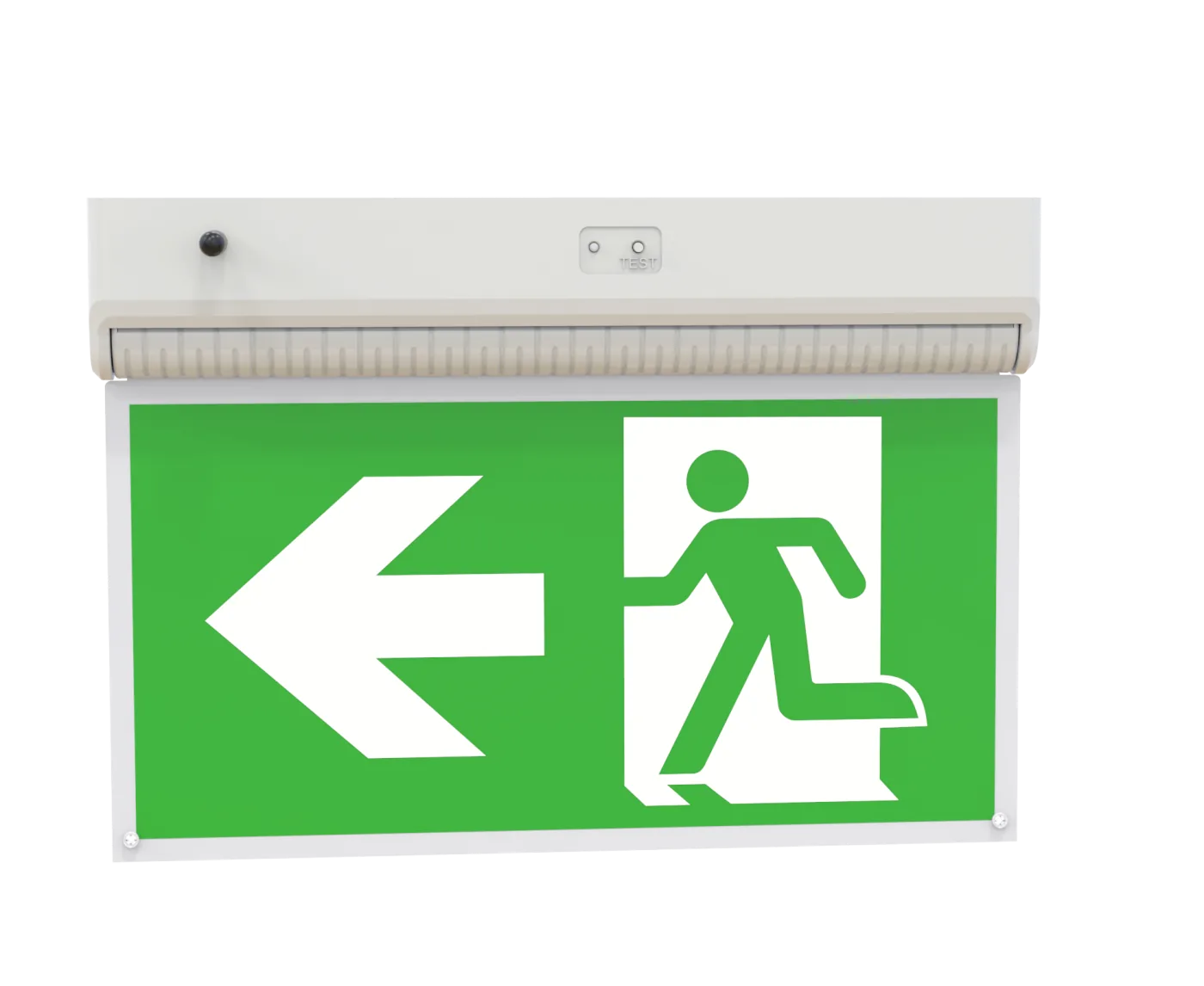 3D
Exit sign luminaire
Discreet LED exit sign luminaire for ceiling, wall, side or pendant mounting – up to 30 m viewing distance.
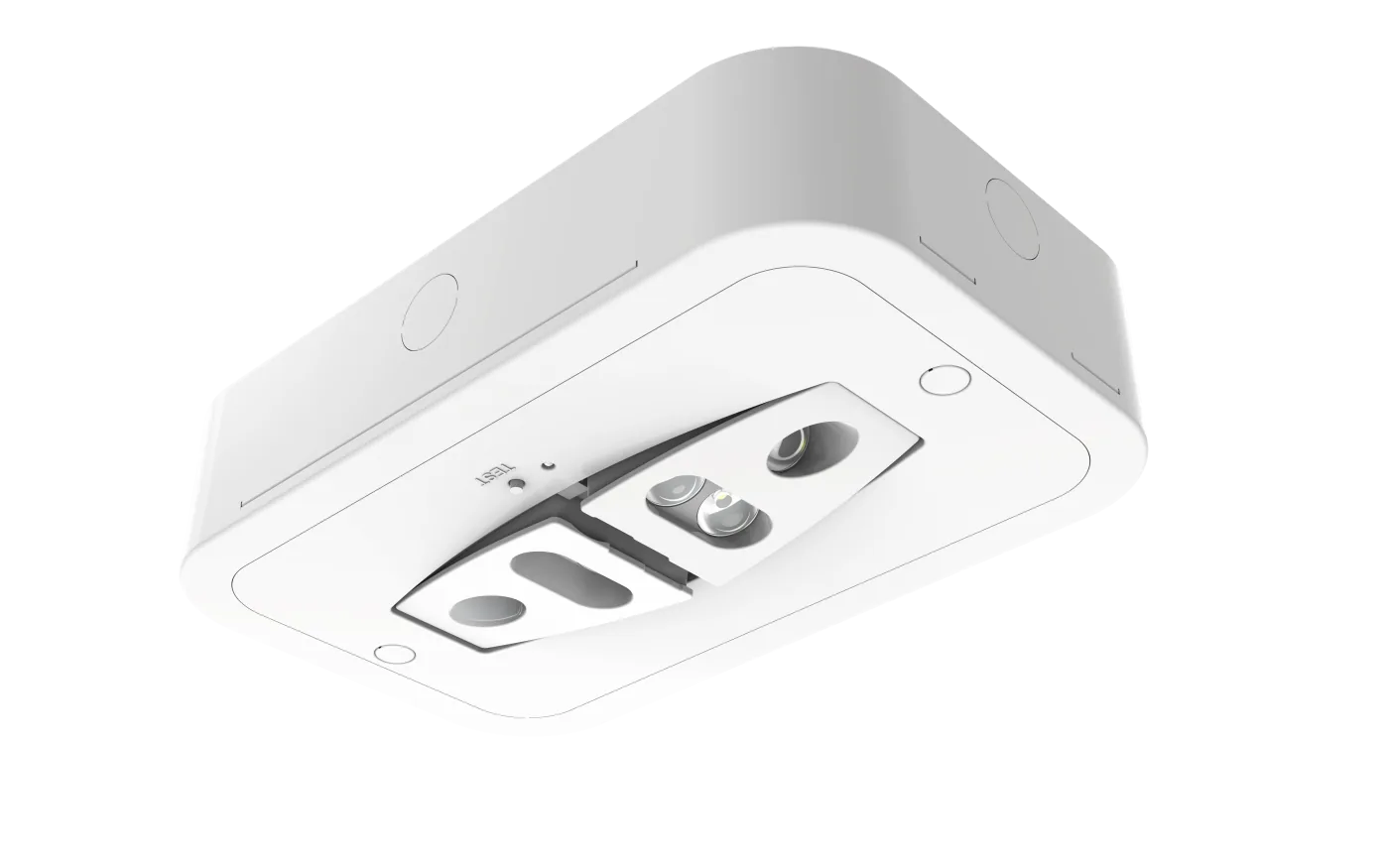 3D
Escape route luminaire
Surface-mounted luminaire for escape routes, light output adjustable to 90° or 180°.
Frequently asked questions
Does a cold store need emergency lighting?
As a rule, yes: cold rooms are often windowless, routes lead through doors and ante-rooms, and there is forklift traffic. The risk assessment and – for larger halls – the fire safety concept therefore regularly lead to escape route and safety lighting.
Can your luminaires be used in cold rooms?
In chilled areas above 0 °C, yes, if protection rating and mounting suit the zone: Series 19 is specified for 0 to 55 °C ambient, the compact emergency light for 0 to 45 °C. Where condensation occurs, we plan a higher protection rating.
What applies in freezer areas below 0 °C?
There you need luminaires explicitly approved for sub-zero temperatures – Series 19 is not intended for this. Talk to us; we plan the area with you and align it with the rest of the installation and the digital logbook.
Why does temperature matter so much for the battery?
Cold reduces a battery's available capacity, heat shortens its life. Only within its specified temperature range does an emergency luminaire reliably reach its rated duration – the annual duration test shows whether it does under real conditions.
Can existing high-bays at docks and picking areas become emergency lighting?
Often, yes – with the emergency driver for LED high-bays up to 300 W in IP65, with LiFePO4 battery and self-test. The ambient temperature at the installation point must be within the specified range; we check this during the free on-site survey.
Related knowledge
Emergency light battery: types, service life, replacement
NiCd, NiMH, LiFePO4 or Li-ion: which battery is in your emergency light, how long it lasts, when it must be replaced and how to dispose of it correctly.
Read articleEmergency lighting duration: 1 hour, 3 hours or 8 hours?
How long must emergency lighting stay on? Rated duration of 1 h, 3 h and 8 h, typical buildings, workplaces, the annual duration test and recharge time.
Read articleSelf-Testing Emergency Lights: Automatic Testing to EN 62034
How do self-testing emergency lights to EN 62034 work? Test sequence, status LED, app monitoring, pros and cons, remaining duties and retrofit options.
Read articleOther building types
Your contacts


Emergency lighting without worries.
Luminaires, installation and maintenance from a single source – every inspection documented digitally in our app. We start with a free on-site survey and standard-compliant design.