Emergency lighting in car dealerships. From showroom to vehicle lift.
A car dealership brings a lot under one roof: a glass showroom with customers, a workshop with vehicle lifts, a parts store and often a car wash. Each area has different requirements for emergency lighting. We design it all as one – discreet in the showroom, robust in the workshop and store.
In car dealerships, safety lighting follows from workplace legislation, the building permit and the fire safety concept. Escape routes need at least 1 lx on the centre line; at high-risk task areas – such as under raised vehicles – EN 1838 requires at least 15 lx or 10% of normal illuminance within 0.5 seconds. Very large sales areas may also fall under national rules for retail premises.
What applies?
- Escape route lighting and exit signs in showroom, workshop, store and staff rooms
- Safety lighting at high-risk task areas – such as vehicle lifts and pits: at least 15 lx within 0.5 s where the risk assessment requires it
- 5 lx vertical at fire extinguishers, first aid points and call points to EN 1838
- Showroom: discreet recessed luminaires, exit signs clearly visible despite glass facade and vehicles
- Car wash and wet areas: luminaires with a suitable protection rating, often IP65
- Paint shops and explosive atmospheres considered separately – their own requirements apply
This describes typical requirements, using Germany as the reference. What applies to your building depends on the building permit, fire safety concept, risk assessment and national or regional rules – exactly what we check during the free on-site survey.
Common mistakes
Exit sign at the door, but under the lift it goes dark instantly in a power cut.
New models are moved around – and end up in front of the exit sign or in the escape route.
Showroom and workshop run six days a week – testing gets postponed. Self-test runs in the background.
How we make it easy
We survey the building, escape routes and existing system and create a standard-compliant emergency lighting design – free and non-binding.
Exit sign, escape route and recessed luminaires plus emergency drivers – with self-test and LiFePO4 battery.
Every test documented digitally, deadlines monitored automatically – ready to show at any inspection.
Annual on-site inspection, all batteries replaced in year 5–6 and repairs – predictable costs instead of surprises.
Matching products
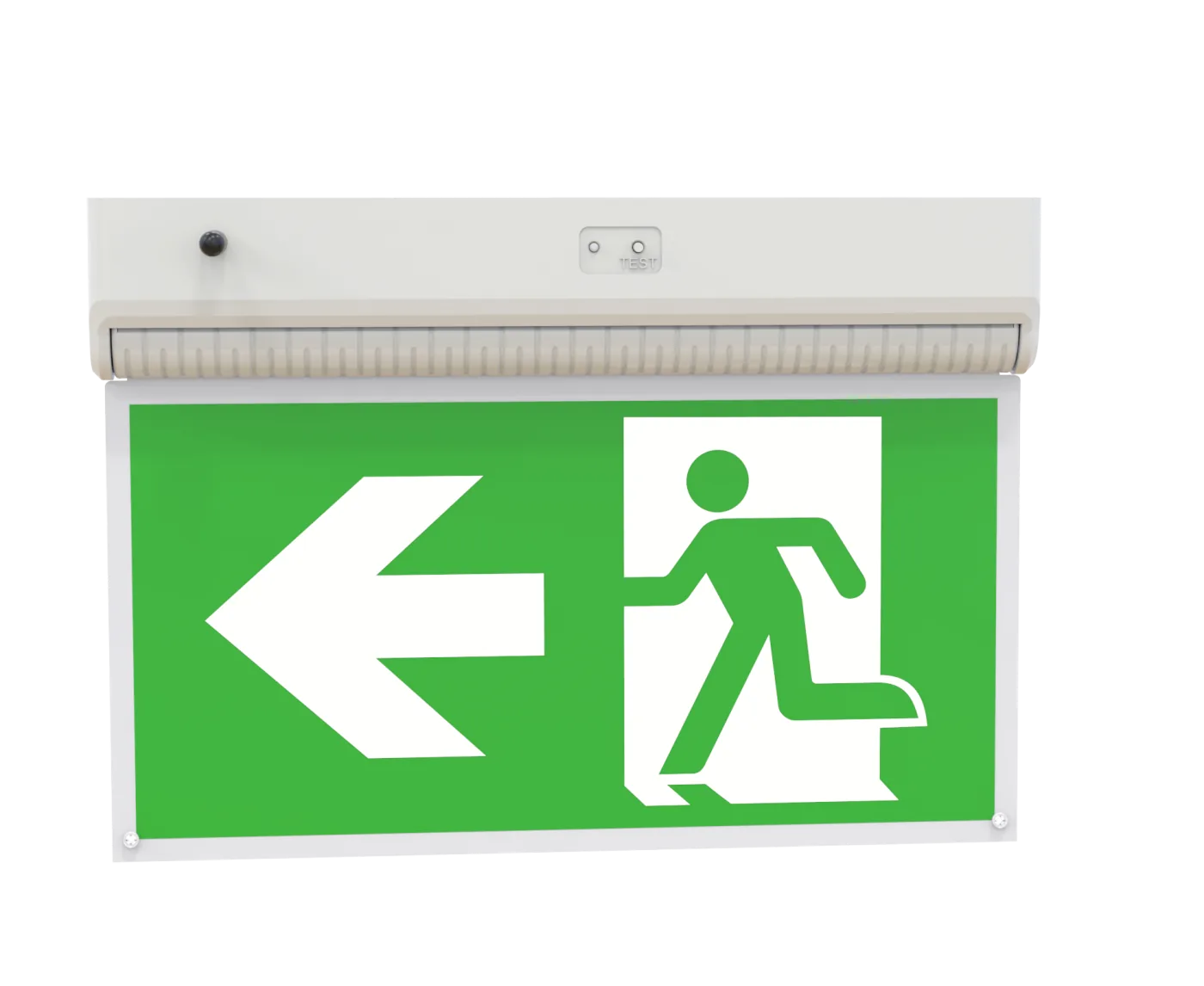 3D
Exit sign luminaire
Discreet LED exit sign luminaire for ceiling, wall, side or pendant mounting – up to 30 m viewing distance.
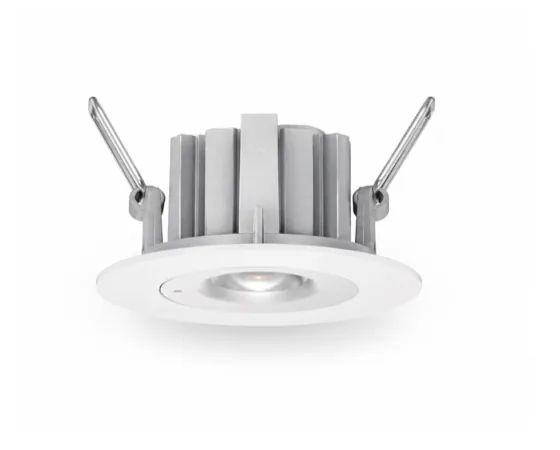 3D
Recessed downlight
Compact emergency recessed luminaire for discreet ceiling integration, 500 lm in emergency mode.
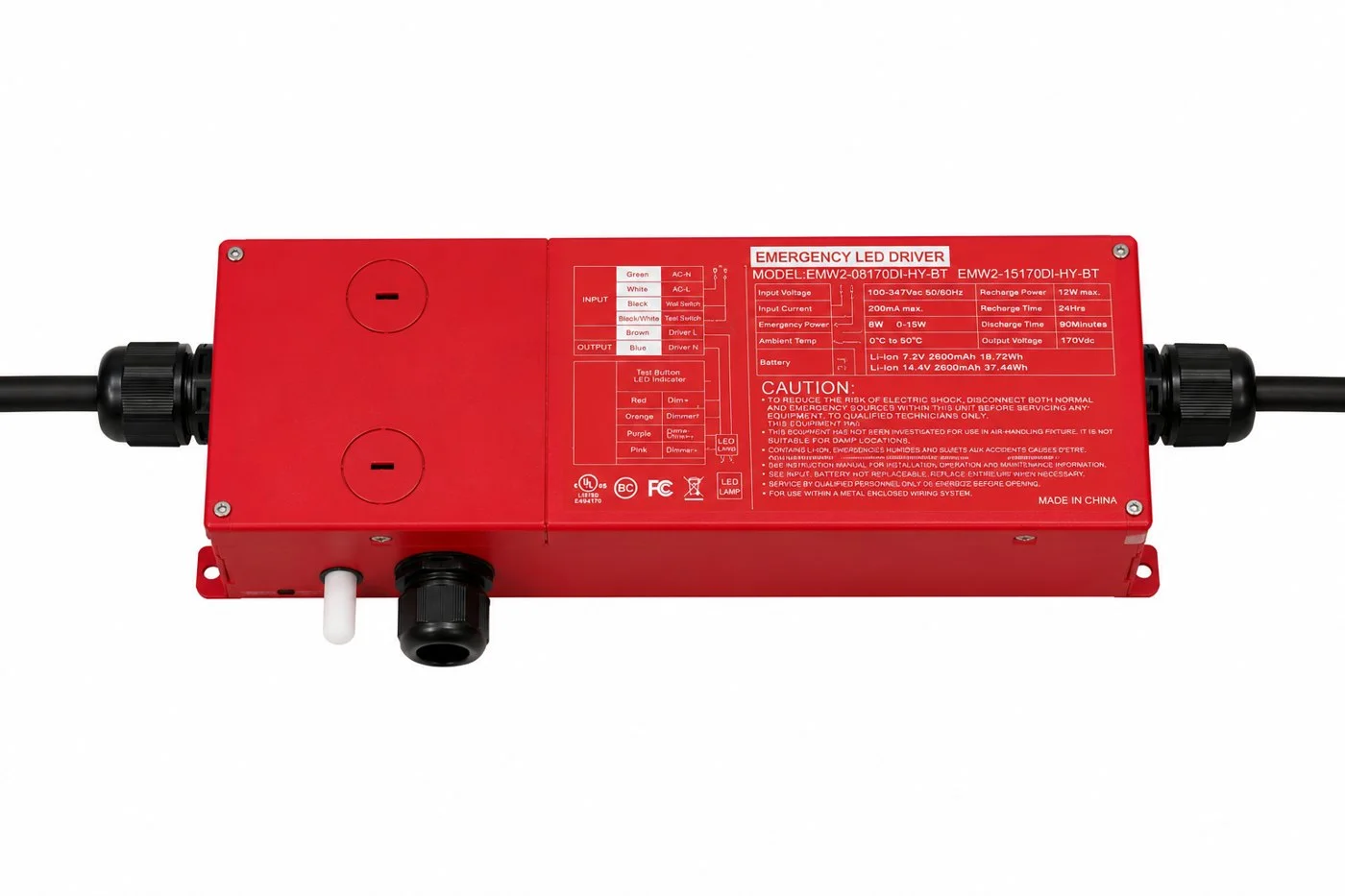
Emergency drivers
Self-contained emergency drivers with battery and self-test – for existing LED luminaires and LED high-bays up to 300 W.
Frequently asked questions
Does a car dealership need emergency lighting?
As a rule, yes: customer traffic in the showroom, high-risk workshop task areas and complex stores regularly lead to safety lighting in the risk assessment and fire safety concept. The exact scope is set by the building permit and fire safety concept.
What applies at the vehicle lift?
If someone works under a raised vehicle, a sudden loss of light can be dangerous. If the risk assessment classifies it as a high-risk task area, EN 1838 requires at least 10% of normal illuminance, at least 15 lx, within 0.5 seconds.
Do retail premises rules apply to the showroom?
Only for very large sales areas. In Germany, the state regulations for retail premises generally apply above 2,000 m² of sales floor. Most dealerships are smaller – then workplace legislation, the building permit and the fire safety concept decide.
How does the showroom stay visually calm?
With recessed downlights that are barely noticeable in normal operation and slim exit sign luminaires with replaceable pictogram film. In the workshop, emergency drivers make existing LED high-bays up to 300 W emergency-capable.
Who takes care of testing and records?
The luminaires test themselves and write results to the digital logbook in the app – useful for manufacturer or insurer audits too. Under the maintenance contract we test on site once a year, replace the batteries in year 5–6 and handle repairs.
Related knowledge
Escape Route Signage: Safety Signs, Evacuation Plans, Guidance
How should escape routes be marked? ISO 7010 safety signs, illuminated vs photoluminescent signs, arrow rules, evacuation plans and floor-level guidance.
Read articleEmergency Lighting Illuminance: Lux Levels per EN 1838
How bright must emergency lighting be? 1 lx, 0.5 lx, 15 lx, 5 lx: all EN 1838 lux levels, uniformity ratios and response times – with table and planning tips.
Read articleEmergency Lighting Maintenance Contracts: Scope and Costs
What does an emergency lighting maintenance contract cover, is it mandatory, which services belong in it and what drives the cost? With a checklist for quotes.
Read articleOther building types
Your contacts


Emergency lighting without worries.
Luminaires, installation and maintenance from a single source – every inspection documented digitally in our app. We start with a free on-site survey and standard-compliant design.