Emergency lighting for hall conversions. New use, new rules.
The old warehouse becomes a gym, an event venue, a padel hall, a showroom or an office loft. With the new use come different visitor numbers, escape routes and requirements – and so different emergency lighting. We design it to match the fire safety concept, supply documents for the permit application and make existing LED high-bays emergency-capable.
Using a warehouse or industrial hall for a different purpose is usually a change of use that requires a building permit; the permit and the fire safety concept set the safety lighting the new use needs. If the public or events are involved, special building rules often apply – in Germany, rooms for more than 200 visitors typically fall under the rules for places of assembly. The design is based on EN 1838, with 1 lx on escape routes and 0.5 lx anti-panic lighting on open areas, and on EN 50172.
What applies?
- Check whether a change of use requires a permit – usually yes if the type of use or the number of people changes
- Fire safety concept for the new use as the basis of the safety lighting
- Check national special building rules – e.g. places of assembly for larger audiences
- Adapt escape routes, exits and exit signs to the new layout
- Anti-panic lighting on large open areas – at least 0.5 lx to EN 1838
- Integrate existing LED hall luminaires with emergency drivers instead of installing new ones
This describes typical requirements, using Germany as the reference. What applies to your building depends on the building permit, fire safety concept, risk assessment and national or regional rules – exactly what we check during the free on-site survey.
Common mistakes
It is only considered after the fit-out – then cables, positions and documents for acceptance are missing.
Exit signs from the warehouse use stay up although partitions and exits have changed.
Events or classes raise the number of people – and suddenly rules for places of assembly apply.
How we make it easy
We survey the building, escape routes and existing system and create a standard-compliant emergency lighting design – free and non-binding.
Exit sign, escape route and recessed luminaires plus emergency drivers – with self-test and LiFePO4 battery.
Every test documented digitally, deadlines monitored automatically – ready to show at any inspection.
Annual on-site inspection, all batteries replaced in year 5–6 and repairs – predictable costs instead of surprises.
Matching products
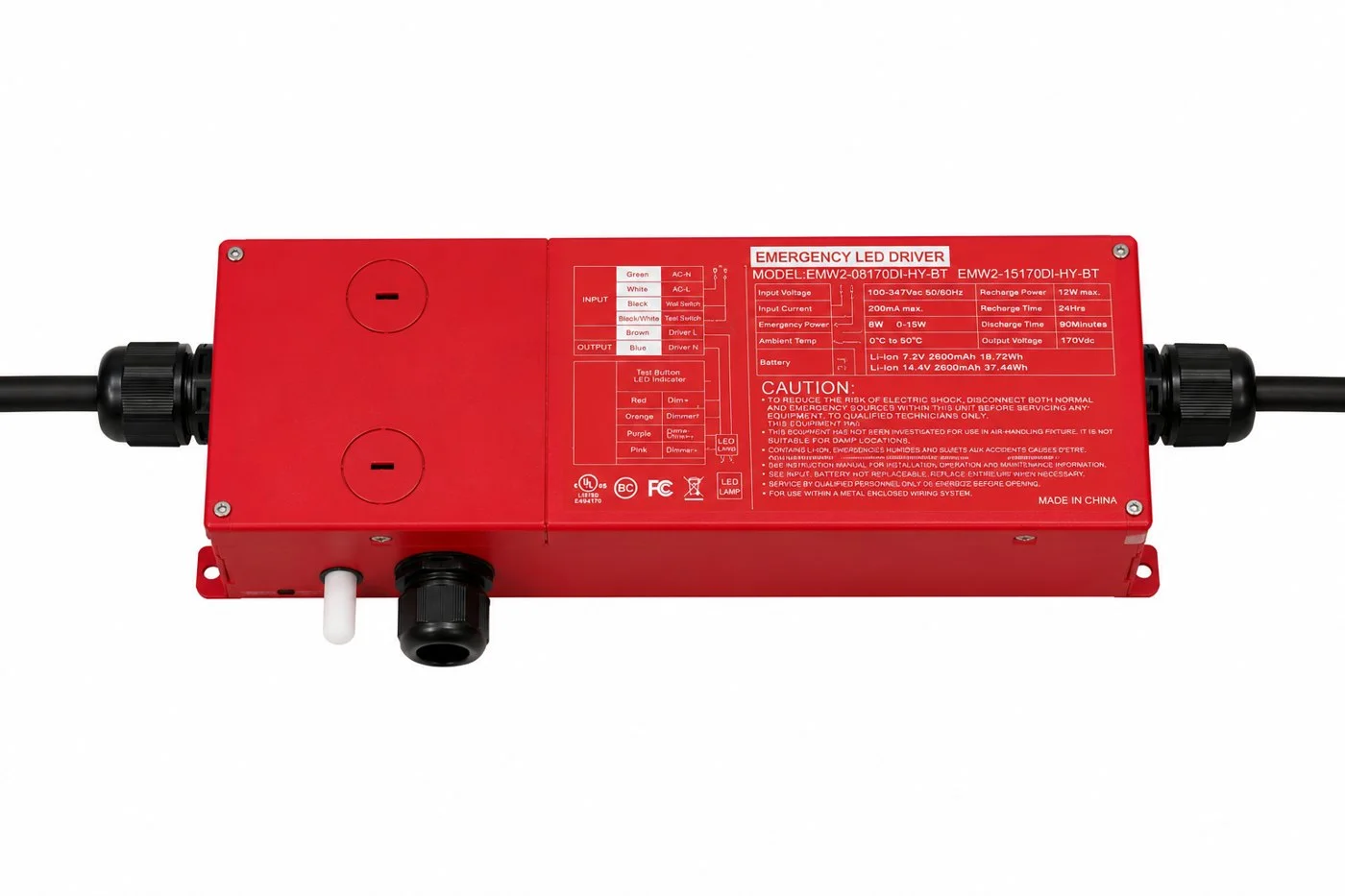
Emergency drivers
Self-contained emergency drivers with battery and self-test – for existing LED luminaires and LED high-bays up to 300 W.
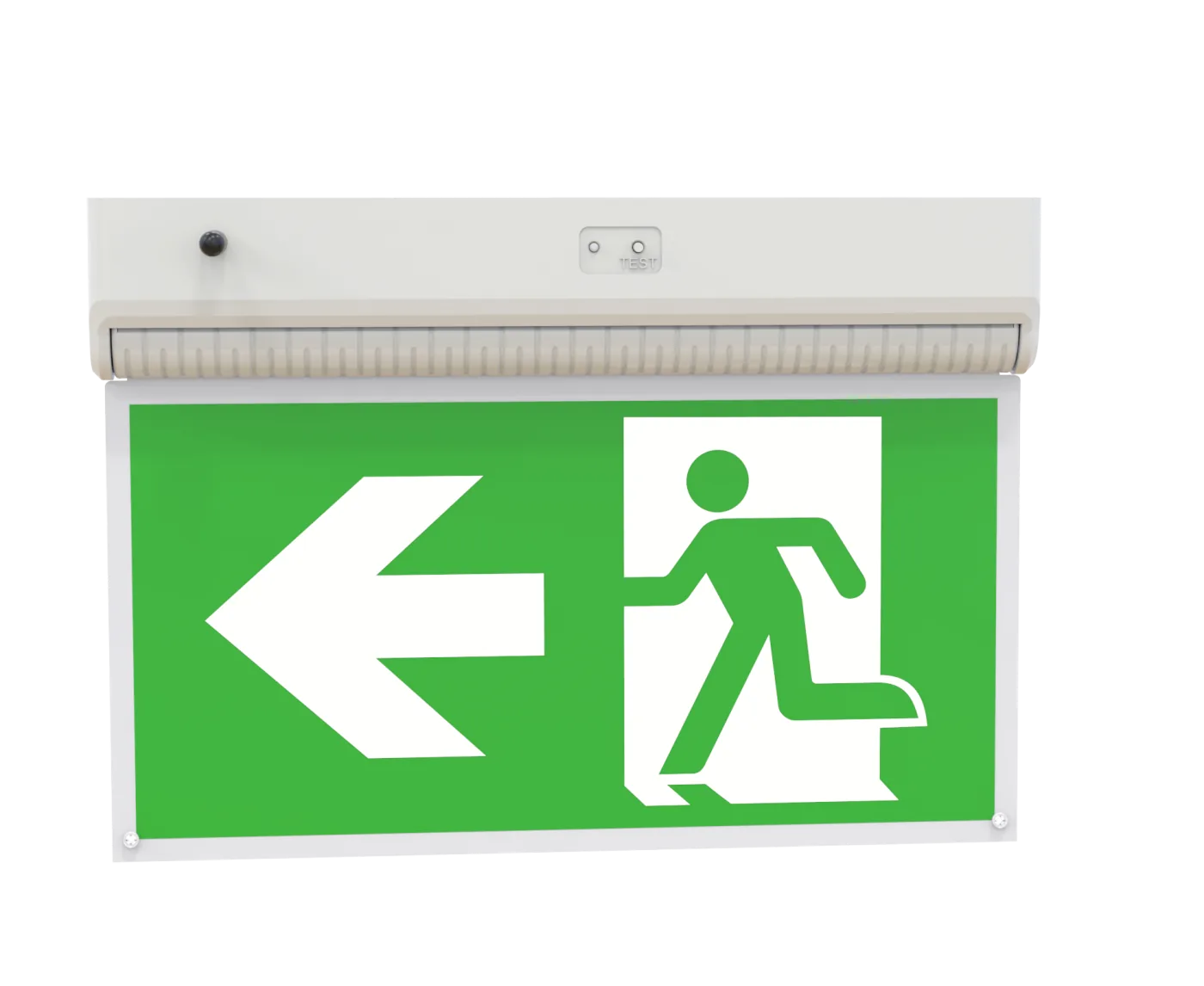 3D
Exit sign luminaire
Discreet LED exit sign luminaire for ceiling, wall, side or pendant mounting – up to 30 m viewing distance.
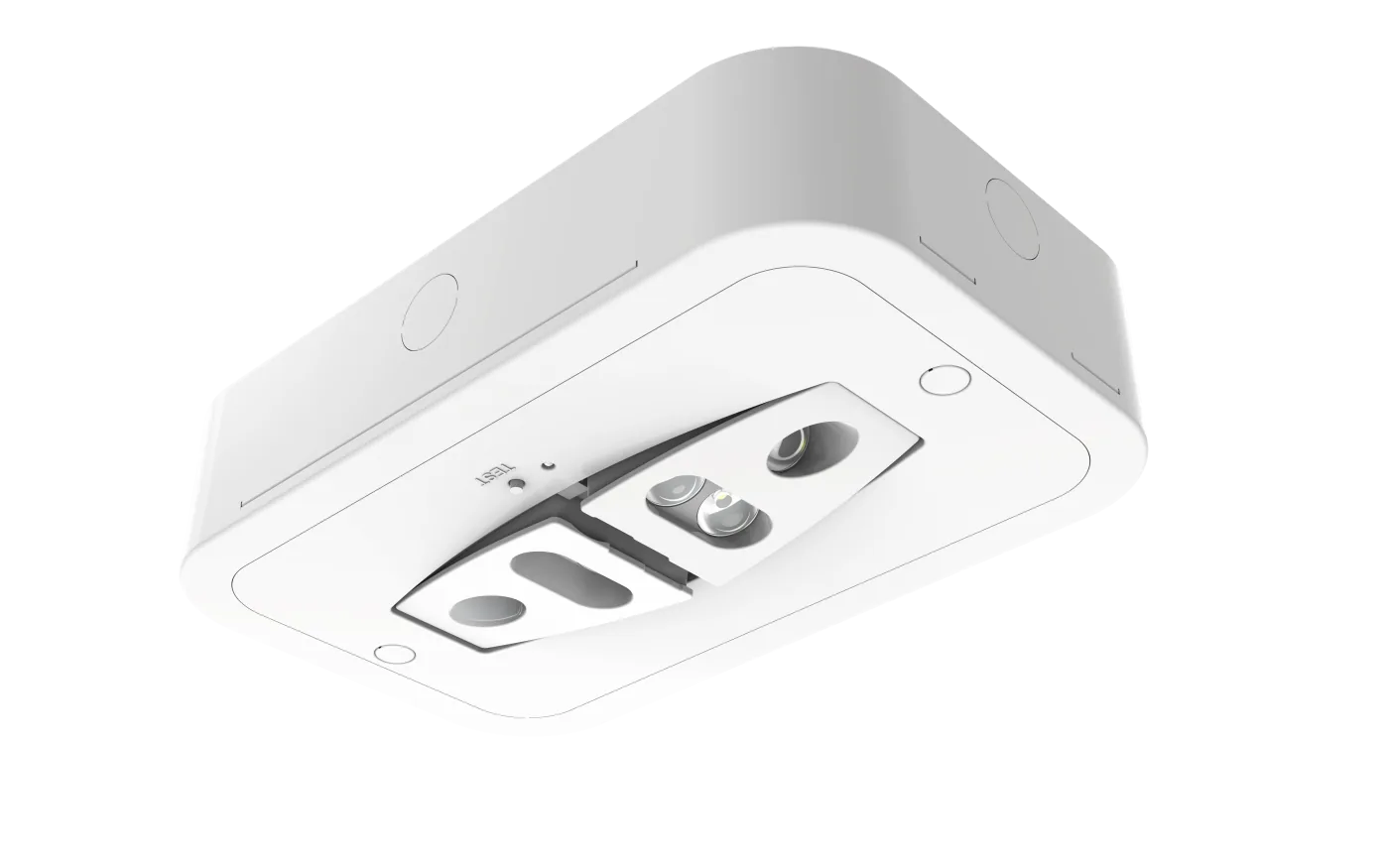 3D
Escape route luminaire
Surface-mounted luminaire for escape routes, light output adjustable to 90° or 180°.
Frequently asked questions
Does a hall conversion need a permit?
As a rule, yes. Using a warehouse as a sports hall, event space, sales area or office changes the type of use – which usually requires a permit application with a fire safety concept. Clarify this early with your architect or the building authority.
Who decides which emergency lighting is needed?
The building permit and the fire safety concept set the requirements, supplemented by national rules for special buildings. We turn these into a standard-compliant design to EN 1838 and EN 50172 – with lighting calculation and luminaire layout.
Can the existing hall luminaires stay?
Often, yes. Series 19 emergency drivers make LED high-bays up to 300 W and LED battens emergency-capable – with their own battery and self-test. That saves new luminaires and cabling; we check on site whether the light levels are sufficient.
How does it work from permit to handover?
First we survey the hall on site free of charge, then we design to the fire safety concept and supply documents for the permit. After approval we install, commission and hand over test reports for acceptance – for special buildings, possibly via an independent expert.
What happens after opening?
The luminaires test themselves and document everything in the digital logbook in the app. Under the maintenance contract we test on site once a year, replace the batteries in year 5–6 and handle repairs.
Related knowledge
Planning Emergency Lighting: A Step-by-Step Design Guide
How is emergency lighting planned? From fire strategy and escape route plan to photometric calculation with LDT files and handover – plus common mistakes.
Read articleEmergency Lighting Inspections by Authorities and Experts
What do fire authority inspections and certified experts check on emergency lighting? Inspection cycles, a preparation checklist and consequences of defects.
Read articleUpgrading Emergency Lighting: LED, Self-Test, Emergency Drivers
When is upgrading emergency lighting worth it? Warning signs, LED benefits, retrofits with emergency drivers, the project process and how to avoid downtime.
Read articleOther building types
Your contacts


Emergency lighting without worries.
Luminaires, installation and maintenance from a single source – every inspection documented digitally in our app. We start with a free on-site survey and standard-compliant design.