Emergency lighting in data centres. When staff are needed during an outage.
A power failure is exactly when a data centre gets busy: technicians check transfer switching, UPS and generator while others have to find their way out of narrow rack aisles. We design safety lighting for aisles, plant and battery rooms and escape routes – independent of the IT power supply and documented via app.
In data centres and server rooms, safety lighting follows from workplace legislation, the building permit and the fire safety concept. A UPS or standby generator for the IT does not automatically replace it: safety lighting must meet EN 1838 and EN 50172 and be tested and documented in its own right. Where staff must operate equipment safely during a power cut, standby or safety lighting with higher illuminance may be needed.
What applies?
- Escape route lighting in aisles between racks, through airlocks and access control to the outside
- Illuminated exit signs – recognisable even in long, uniform rows of racks
- Safety lighting in UPS, battery, electrical and generator rooms for operating staff
- At least 5 lx vertical at fire extinguishers, suppression system release points and first aid equipment
- Access-controlled doors: ensure they open for escape even during a power cut
- Testing without interfering with IT operation – via self-test and digital logbook
This describes typical requirements, using Germany as the reference. What applies to your building depends on the building permit, fire safety concept, risk assessment and national or regional rules – exactly what we check during the free on-site survey.
Common mistakes
The UPS powers the servers, not necessarily the lights – and is not automatically a safety power source.
Floor tiles lifted for maintenance become a trip hazard in the dark. Escape routes need light.
Airlocks and access control must not block the escape route in an emergency – plan lighting and door hardware together.
How we make it easy
We survey the building, escape routes and existing system and create a standard-compliant emergency lighting design – free and non-binding.
Exit sign, escape route and recessed luminaires plus emergency drivers – with self-test and LiFePO4 battery.
Every test documented digitally, deadlines monitored automatically – ready to show at any inspection.
Annual on-site inspection, all batteries replaced in year 5–6 and repairs – predictable costs instead of surprises.
Matching products
 3D
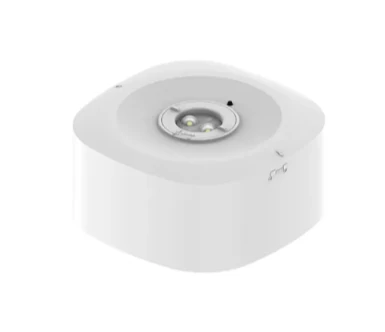
Compact emergency light
Compact emergency light for escape routes, recessed or surface-mounted, with interchangeable optics.
 3D
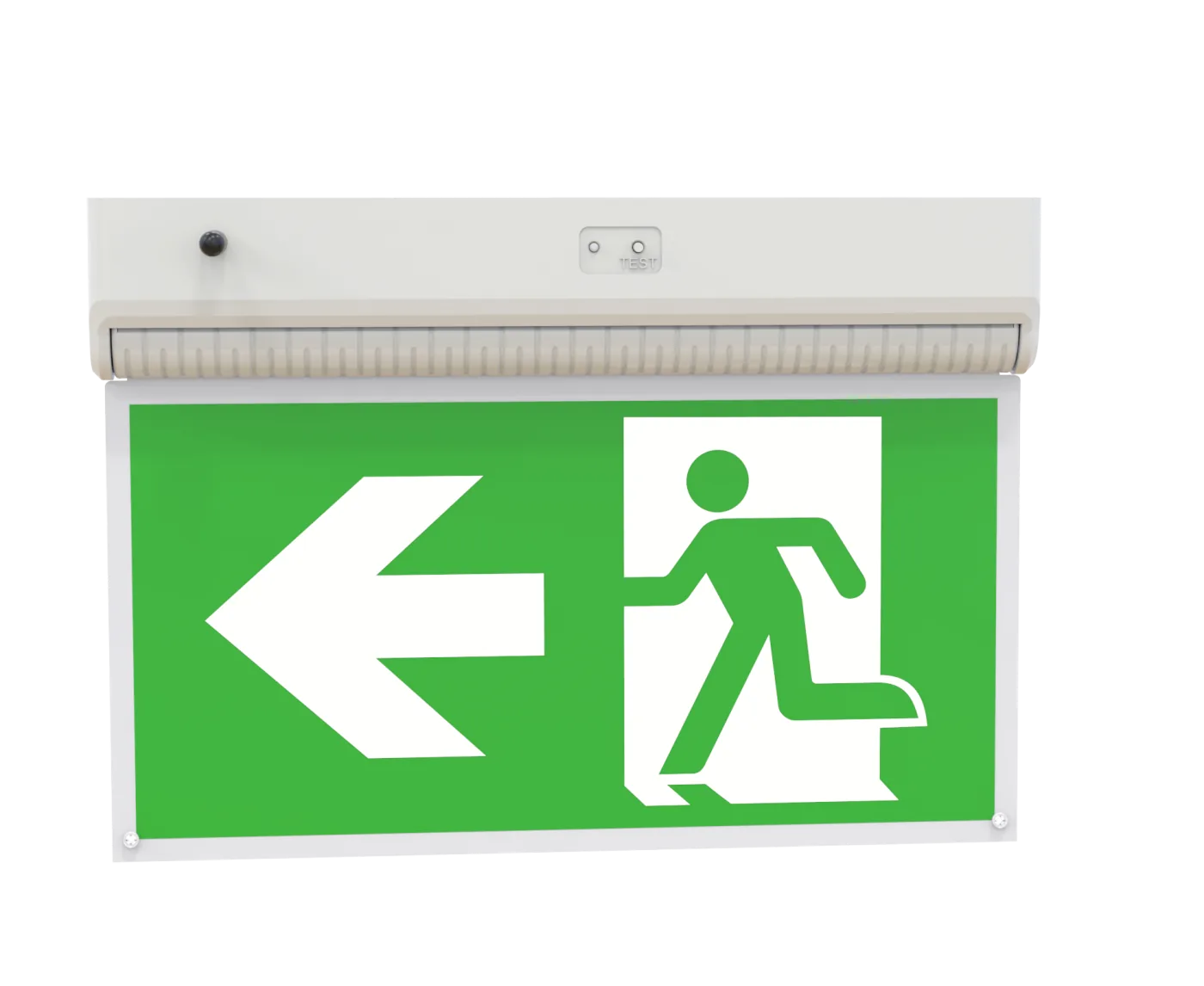
Exit sign luminaire
Discreet LED exit sign luminaire for ceiling, wall, side or pendant mounting – up to 30 m viewing distance.
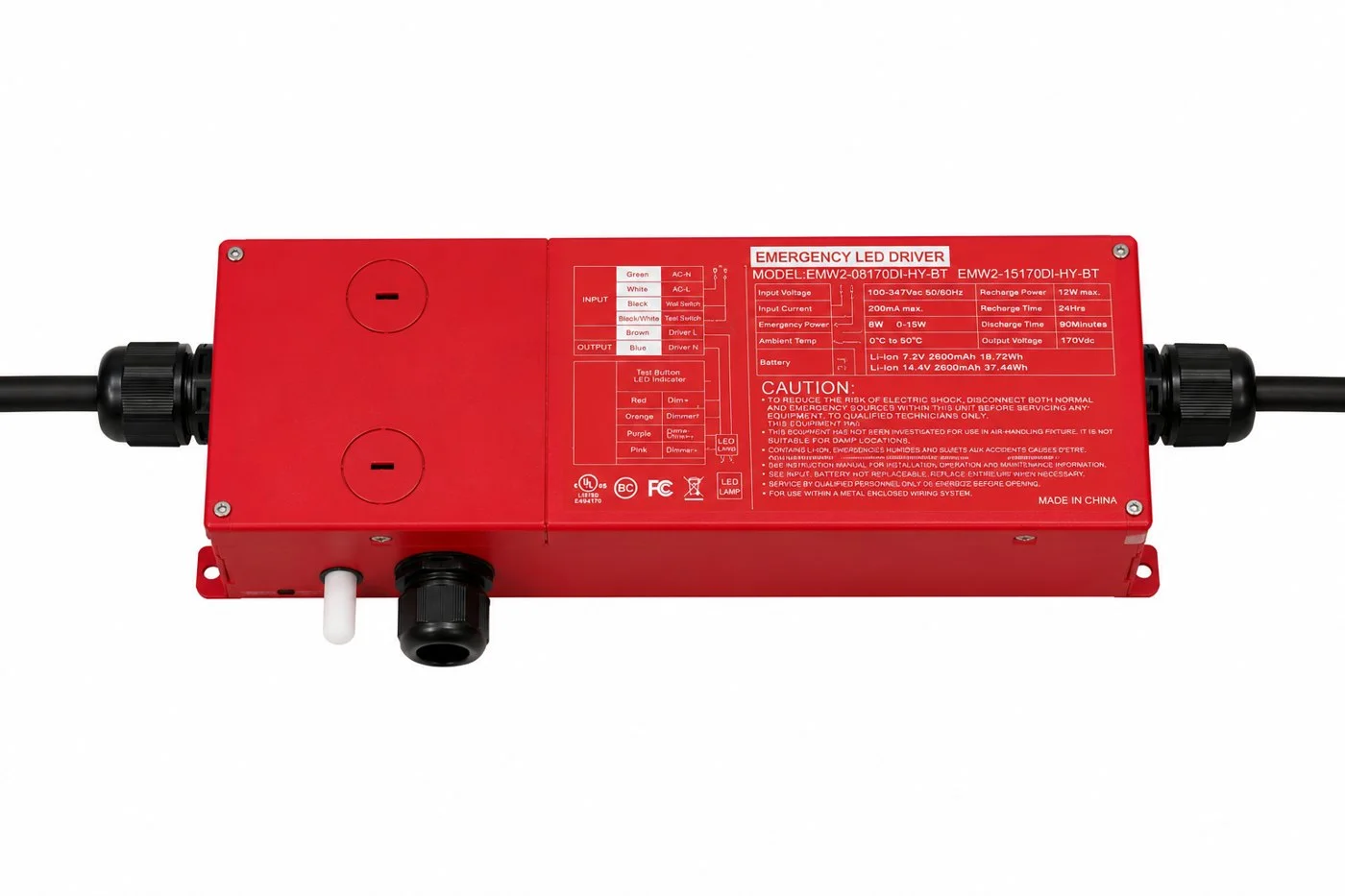
Emergency drivers
Self-contained emergency drivers with battery and self-test – for existing LED luminaires and LED high-bays up to 300 W.
Frequently asked questions
Does a server room need emergency lighting?
That depends on size, use and the risk assessment. Data centres with regularly present staff, long rack aisles and airlocks generally need escape route lighting and exit signs; for small server rooms the building permit, fire safety concept and workplace rules define what is required.
Does the UPS replace safety lighting?
Not automatically. Safety lighting needs a power source that meets the requirements of EN 50172 and the relevant installation standards (in Germany DIN VDE 0100-560), and it must be tested regularly. An IT UPS is usually not designed for this; self-contained luminaires are independent of it.
What about technicians working during an outage?
Anyone checking transfer switching or shutting equipment down safely during a power cut needs enough light. Depending on the risk assessment, escape route lighting is not sufficient – then we design higher illuminance for those areas, at least 15 lx under EN 1838 where there is special risk.
What role does EN 50600 play?
The EN 50600 series describes the design and operation of data centres in general, including power supply and security. For safety lighting, EN 1838, EN 50172 and workplace legislation remain decisive; the operator, fire safety concept and any certification define which requirements apply in a given case.
Can testing disrupt IT operation?
No. Self-test luminaires test themselves on their own battery without switching off circuits. Results are available via Bluetooth in the app – access to sensitive areas is only needed when something actually has to be replaced.
Related knowledge
Types of Emergency Lighting: Escape Route, Anti-Panic, Standby
Escape route, anti-panic, high-risk task area and standby lighting explained per EN 1838 – with clear definitions, an overview table and operating modes.
Read articleSelf-contained vs central battery emergency lighting
Self-contained, group battery or central battery? A system comparison for emergency lighting: installation, cabling, space, maintenance and typical uses.
Read articleEmergency Lighting Illuminance: Lux Levels per EN 1838
How bright must emergency lighting be? 1 lx, 0.5 lx, 15 lx, 5 lx: all EN 1838 lux levels, uniformity ratios and response times – with table and planning tips.
Read articleOther building types
Your contacts


Emergency lighting without worries.
Luminaires, installation and maintenance from a single source – every inspection documented digitally in our app. We start with a free on-site survey and standard-compliant design.