Emergency lighting in indoor sports halls. Even mid-game.
Padel, bouldering, trampoline parks and indoor football often move into converted commercial halls – with glass courts, high ceilings, spectators at the bar and guests who do not know the building. When the power fails, someone is on the wall or mid-jump. We design anti-panic and escape route lighting for the whole area and make existing LED high-bays emergency-capable.
Padel, climbing, trampoline and indoor football halls are premises open to the public and workplaces at the same time. The safety lighting is set by the building permit and the fire safety concept, based on the risk assessment and EN 1838. Open hall areas usually need anti-panic lighting of at least 0.5 lx, escape routes at least 1 lx on the centre line. Where rooms hold larger audiences, national rules for places of assembly may apply – in Germany typically above 200 visitors.
What applies?
- Anti-panic lighting to EN 1838 on open playing, climbing and jumping areas – at least 0.5 lx
- Escape routes between courts and to the exits with at least 1 lx on the centre line
- Exit signs that remain recognisable through glass walls, nets and across climbing walls
- Safety lighting at climbing walls and trampoline areas where the risk assessment requires it – so belayers can lower and jumpers can stop safely
- Rules for places of assembly where rooms hold larger audiences, e.g. with stands, bar or events
- Luminaires above playing areas mounted or protected against ball impact
This describes typical requirements, using Germany as the reference. What applies to your building depends on the building permit, fire safety concept, risk assessment and national or regional rules – exactly what we check during the free on-site survey.
Common mistakes
Exit signs hang at the doors – on courts, at the wall and on the jump zones it stays dark.
Glass back walls, nets and climbing volumes block the view of the next exit sign.
A warehouse becomes a sports hall – the old emergency lighting fits neither the new use nor the visitor numbers.
How we make it easy
We survey the building, escape routes and existing system and create a standard-compliant emergency lighting design – free and non-binding.
Exit sign, escape route and recessed luminaires plus emergency drivers – with self-test and LiFePO4 battery.
Every test documented digitally, deadlines monitored automatically – ready to show at any inspection.
Annual on-site inspection, all batteries replaced in year 5–6 and repairs – predictable costs instead of surprises.
Matching products
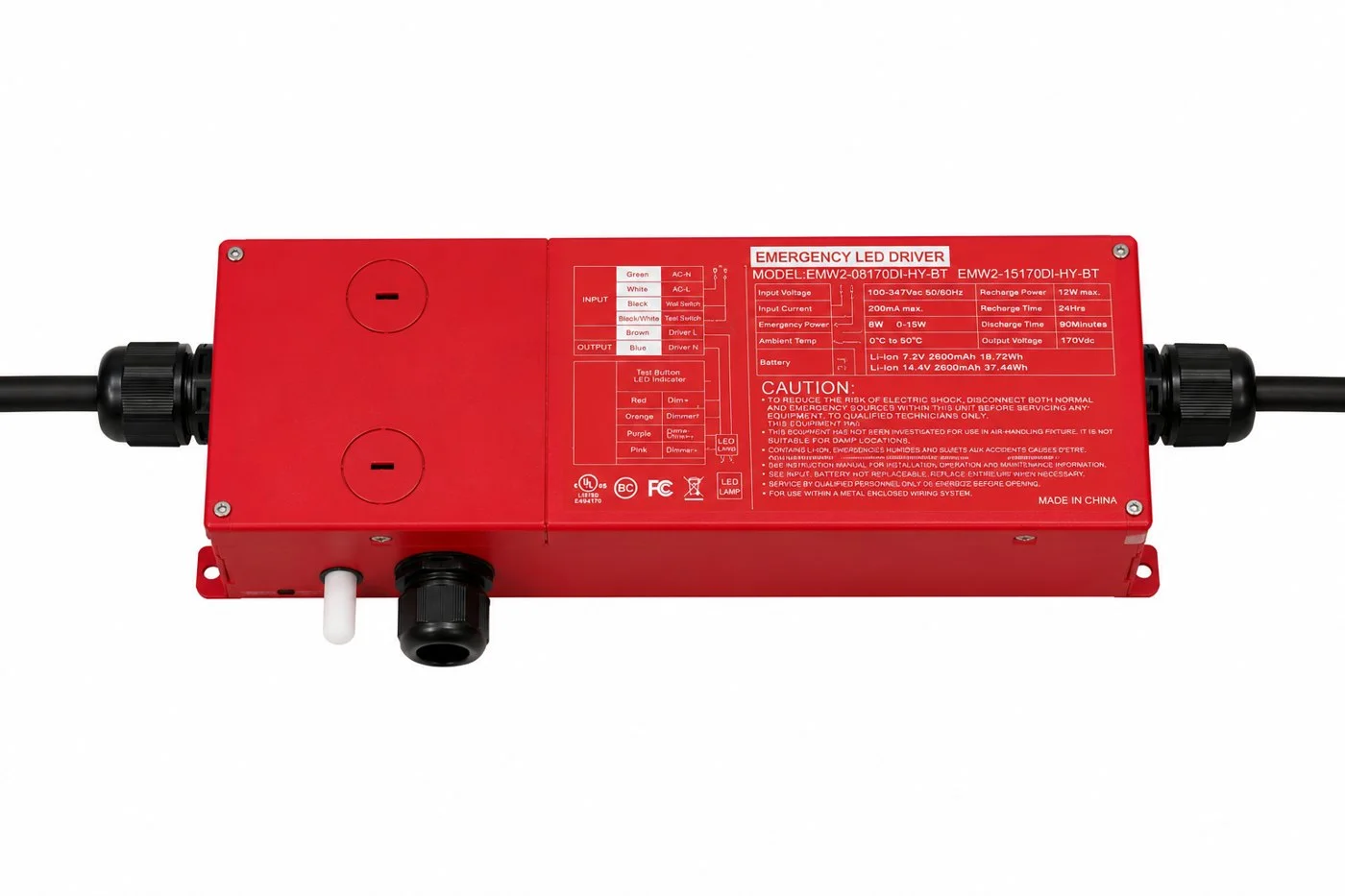
Emergency drivers
Self-contained emergency drivers with battery and self-test – for existing LED luminaires and LED high-bays up to 300 W.
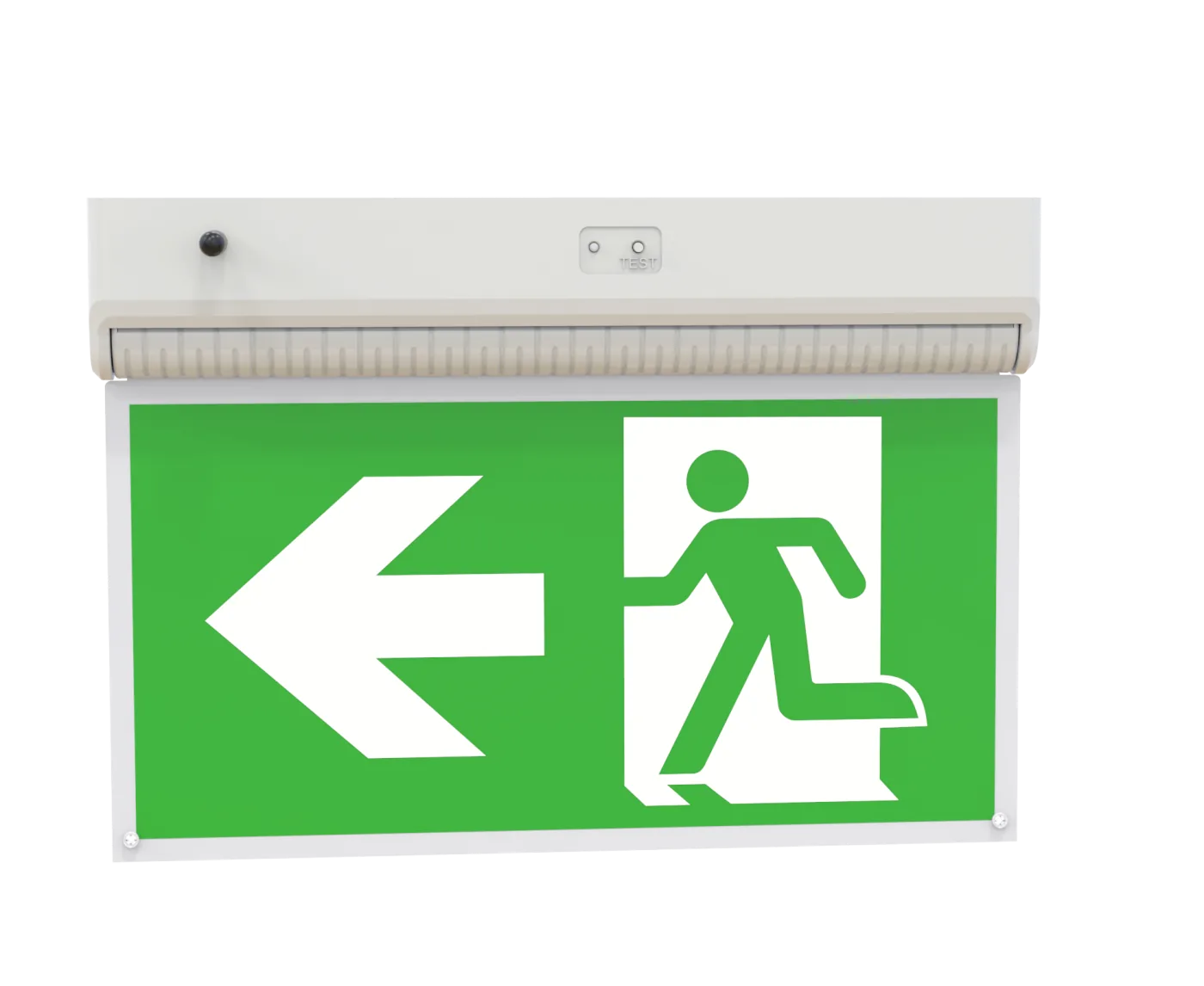 3D
Exit sign luminaire
Discreet LED exit sign luminaire for ceiling, wall, side or pendant mounting – up to 30 m viewing distance.
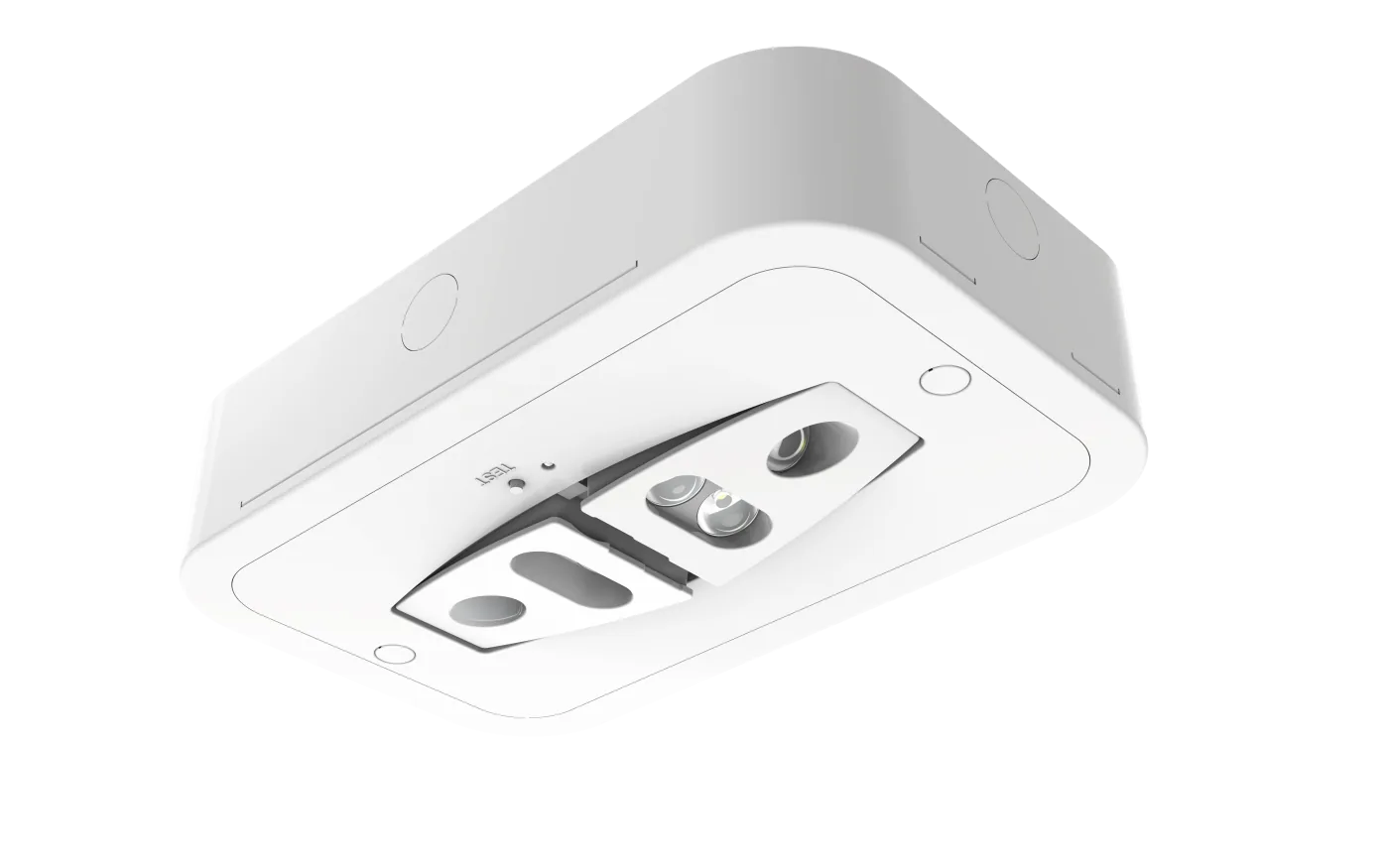 3D
Escape route luminaire
Surface-mounted luminaire for escape routes, light output adjustable to 90° or 180°.
Frequently asked questions
Does a padel hall need emergency lighting?
As a rule, yes. Large hall areas, public access and guests unfamiliar with the building regularly lead to anti-panic, escape route and exit sign lighting in the permit and fire safety concept. What counts are the requirements for your specific building.
What applies in climbing and bouldering halls?
Besides anti-panic and escape route lighting, the climbing wall matters: in a power cut, belayers must be able to lower their partners in a controlled way. Whether higher illuminance is needed there follows from the risk assessment – we include the wall areas specifically in the design.
When does an indoor sports hall become a place of assembly?
That depends on national building law. In Germany, rooms intended for more than 200 visitors usually fall under the state regulations for places of assembly – players, spectators and bar guests count together – with additional requirements for safety lighting.
Can existing high-bays become emergency lighting?
Often, yes. The Series 19 emergency driver makes LED high-bays up to 300 W emergency-capable – with its own LiFePO4 battery and self-test, without a central battery. We check whether the anti-panic calculation works during the free on-site survey.
How is testing done with long opening hours?
All luminaires test themselves at times you set – at night, for example – and report results via Bluetooth to the app. You show the digital logbook at inspections; we carry out the on-site test once a year under the maintenance contract.
Related knowledge
Anti-Panic Lighting to EN 1838: Requirements and Design Guide
Anti-panic (open area) lighting to EN 1838: 0.5 lx on the core area excluding a 0.5 m border, 40:1 uniformity, where it is needed, design tips and luminaires.
Read articleExit Sign Viewing Distance: Size, Placement and ISO 7010
How large must an exit sign be? Calculate viewing distance per EN 1838, place ISO 7010 signs correctly and replace outdated pictograms – with worked examples.
Read articlePlanning Emergency Lighting: A Step-by-Step Design Guide
How is emergency lighting planned? From fire strategy and escape route plan to photometric calculation with LDT files and handover – plus common mistakes.
Read articleOther building types
Your contacts


Emergency lighting without worries.
Luminaires, installation and maintenance from a single source – every inspection documented digitally in our app. We start with a free on-site survey and standard-compliant design.