Emergency lighting in indoor pools. Orientation, even in the water.
In a pool hall the air is humid and chlorinated, floors are wet and bathers are in the water – often barefoot and without glasses. When the power fails they must see the pool edge and exits at once. We design safety lighting with corrosion-resistant IP65 luminaires for the hall, changing rooms and plant rooms and retrofit existing damp-proof luminaires with emergency drivers.
For indoor and leisure pools, safety lighting requirements follow from the building permit, fire safety concept and workplace legislation; in Germany, pools with spectator areas for more than 200 people may also fall under places of assembly rules. In the pool hall, anti-panic lighting of at least 0.5 lx under EN 1838 provides orientation, and escape routes need at least 1 lx. Humidity and chlorine call for corrosion-resistant IP65 luminaires.
What applies?
- Anti-panic lighting in the pool hall – pool edge, steps and exits must be visible
- Escape route lighting and exit signs through changing rooms, showers and foyer to the outside
- Corrosion-resistant IP65 luminaires in hall, showers and changing rooms – chlorine and moisture attack housings
- Plant rooms with chlorination, pumps and filters: safety lighting per risk assessment
- Sauna cabins: only special high-temperature luminaires – rest and ante rooms with standard luminaires
- Testing without ladders over the pool – via self-test and digital logbook
This describes typical requirements, using Germany as the reference. What applies to your building depends on the building permit, fire safety concept, risk assessment and national or regional rules – exactly what we check during the free on-site survey.
Common mistakes
Standard luminaires corrode in chlorinated air, contacts and batteries fail – often only found at the inspection.
Corridors and doors are planned – the water area itself stays dark in a power cut.
High luminaires above the water are rarely tested. Self-test reports their status to the app.
How we make it easy
We survey the building, escape routes and existing system and create a standard-compliant emergency lighting design – free and non-binding.
Exit sign, escape route and recessed luminaires plus emergency drivers – with self-test and LiFePO4 battery.
Every test documented digitally, deadlines monitored automatically – ready to show at any inspection.
Annual on-site inspection, all batteries replaced in year 5–6 and repairs – predictable costs instead of surprises.
Matching products
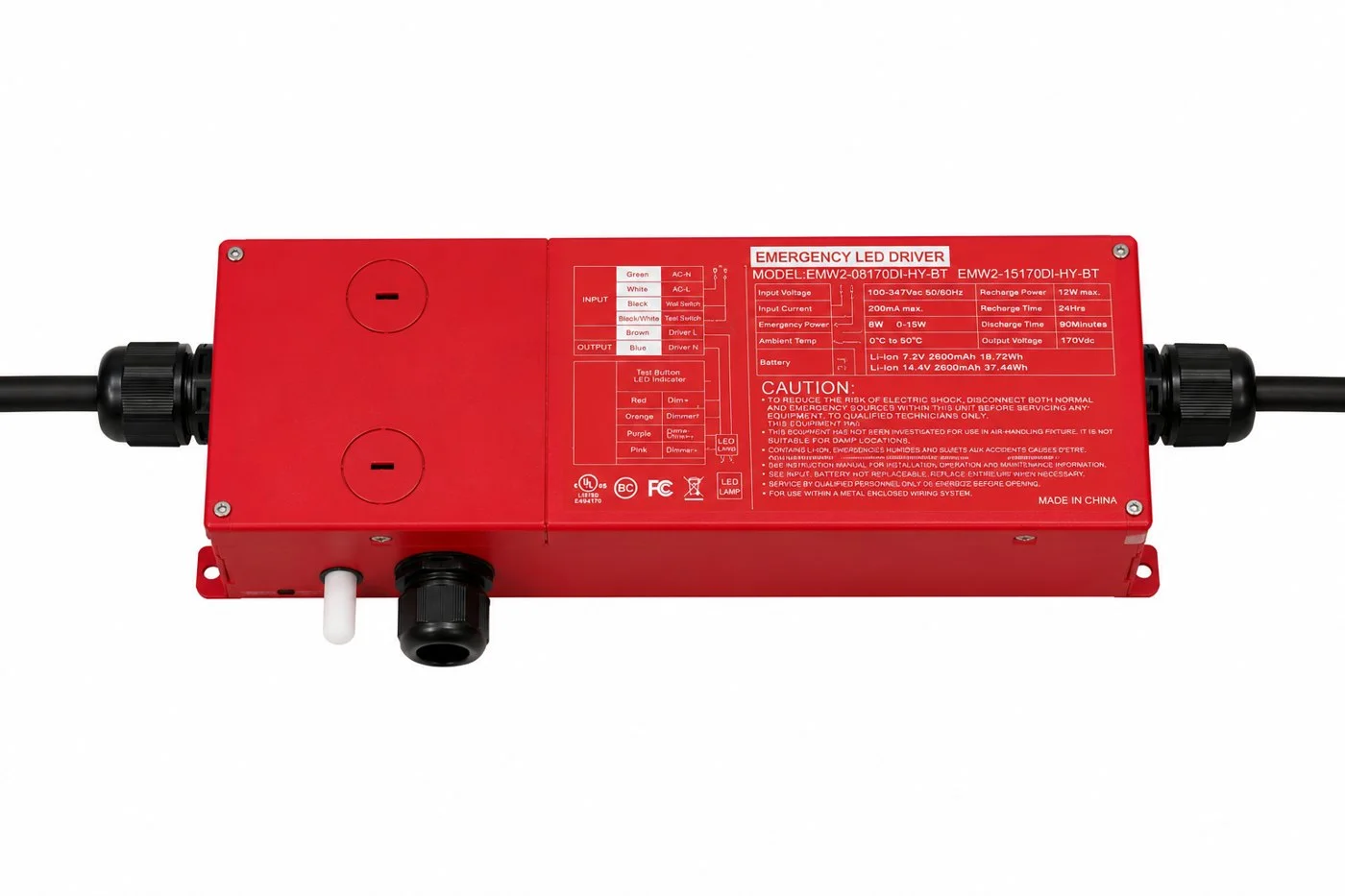
Emergency drivers
Self-contained emergency drivers with battery and self-test – for existing LED luminaires and LED high-bays up to 300 W.
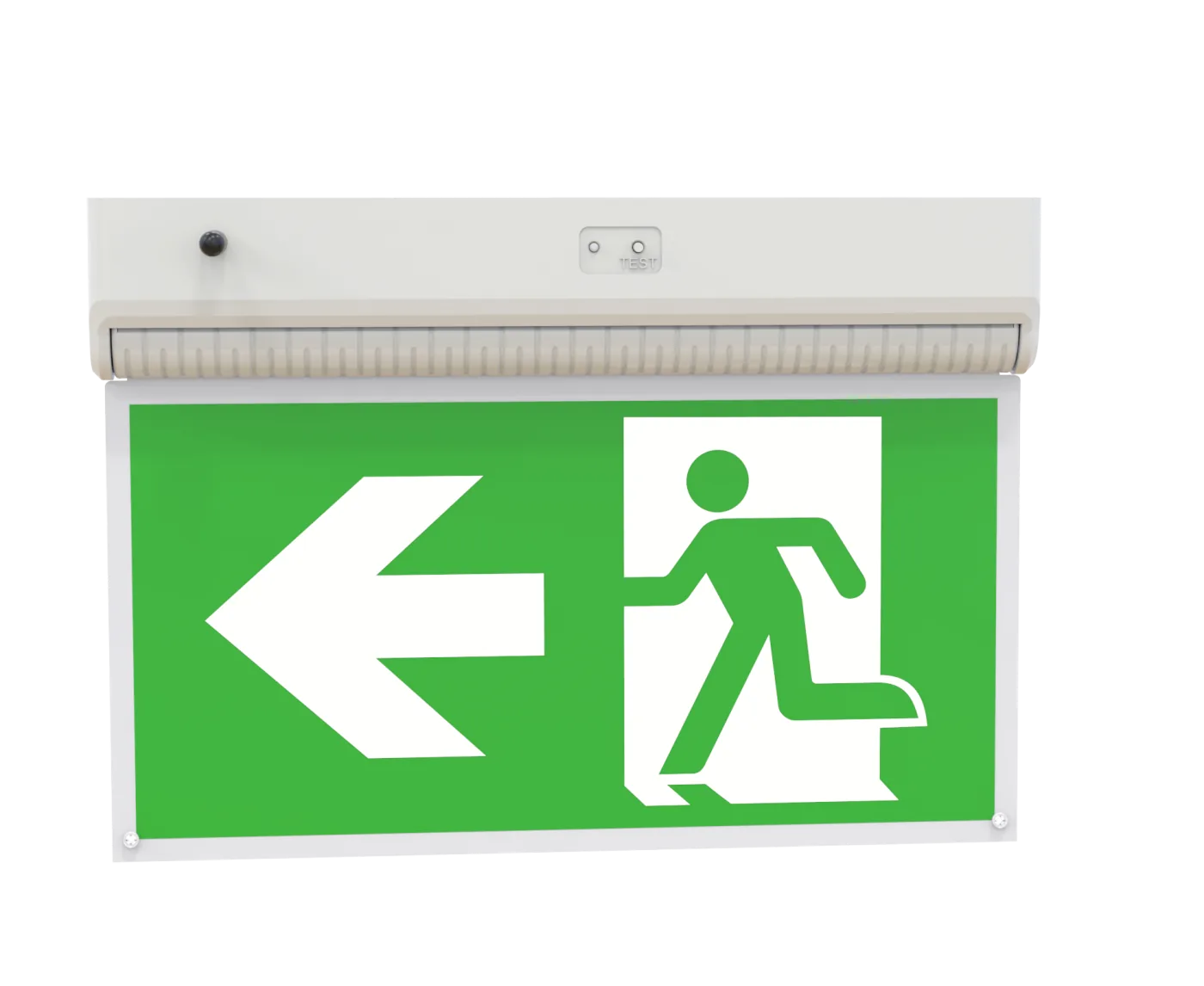 3D
Exit sign luminaire
Discreet LED exit sign luminaire for ceiling, wall, side or pendant mounting – up to 30 m viewing distance.
Frequently asked questions
Does an indoor pool need emergency lighting?
As a rule, yes. Many people, wet floors and people in the water lead to safety lighting in the pool hall, changing rooms and escape routes. The building permit and fire safety concept define the exact areas; pools with large spectator areas may also fall under places of assembly rules.
Which luminaires withstand humidity and chlorine?
Corrosion-resistant luminaires with a high protection rating are needed, usually IP65. Our emergency driver is available in an IP65 housing and makes existing LED damp-proof luminaires emergency-capable; for the hall itself we choose luminaires suited to the atmosphere.
What applies in the sauna?
Sauna cabins need special luminaires designed for the high temperatures there – Series 19 luminaires are not intended for this. In rest rooms, ante rooms and corridors of the spa area we use standard luminaires suited to the environment.
What about bathers in the water?
In a power cut swimmers must see the pool edge, steps and exits. Anti-panic lighting of at least 0.5 lx in the hall ensures nobody loses orientation and staff can clear the hall calmly.
Who handles testing and battery replacement?
Under the NOTLUX maintenance contract we carry out the annual on-site inspection, battery replacement in year 5 to 6 and repairs. Especially in humid environments, the digital logbook shows early when a luminaire is weakening.
Related knowledge
Types of Emergency Lighting: Escape Route, Anti-Panic, Standby
Escape route, anti-panic, high-risk task area and standby lighting explained per EN 1838 – with clear definitions, an overview table and operating modes.
Read articleUpgrading Emergency Lighting: LED, Self-Test, Emergency Drivers
When is upgrading emergency lighting worth it? Warning signs, LED benefits, retrofits with emergency drivers, the project process and how to avoid downtime.
Read articleEmergency Lighting Maintenance Contracts: Scope and Costs
What does an emergency lighting maintenance contract cover, is it mandatory, which services belong in it and what drives the cost? With a checklist for quotes.
Read articleOther building types
Your contacts


Emergency lighting without worries.
Luminaires, installation and maintenance from a single source – every inspection documented digitally in our app. We start with a free on-site survey and standard-compliant design.